FCI 209 · Tibet (China)

Tibetan Terrier

Despite the name, not a terrier. According to the standard, a herding dog that also guarded traders on their way to China.

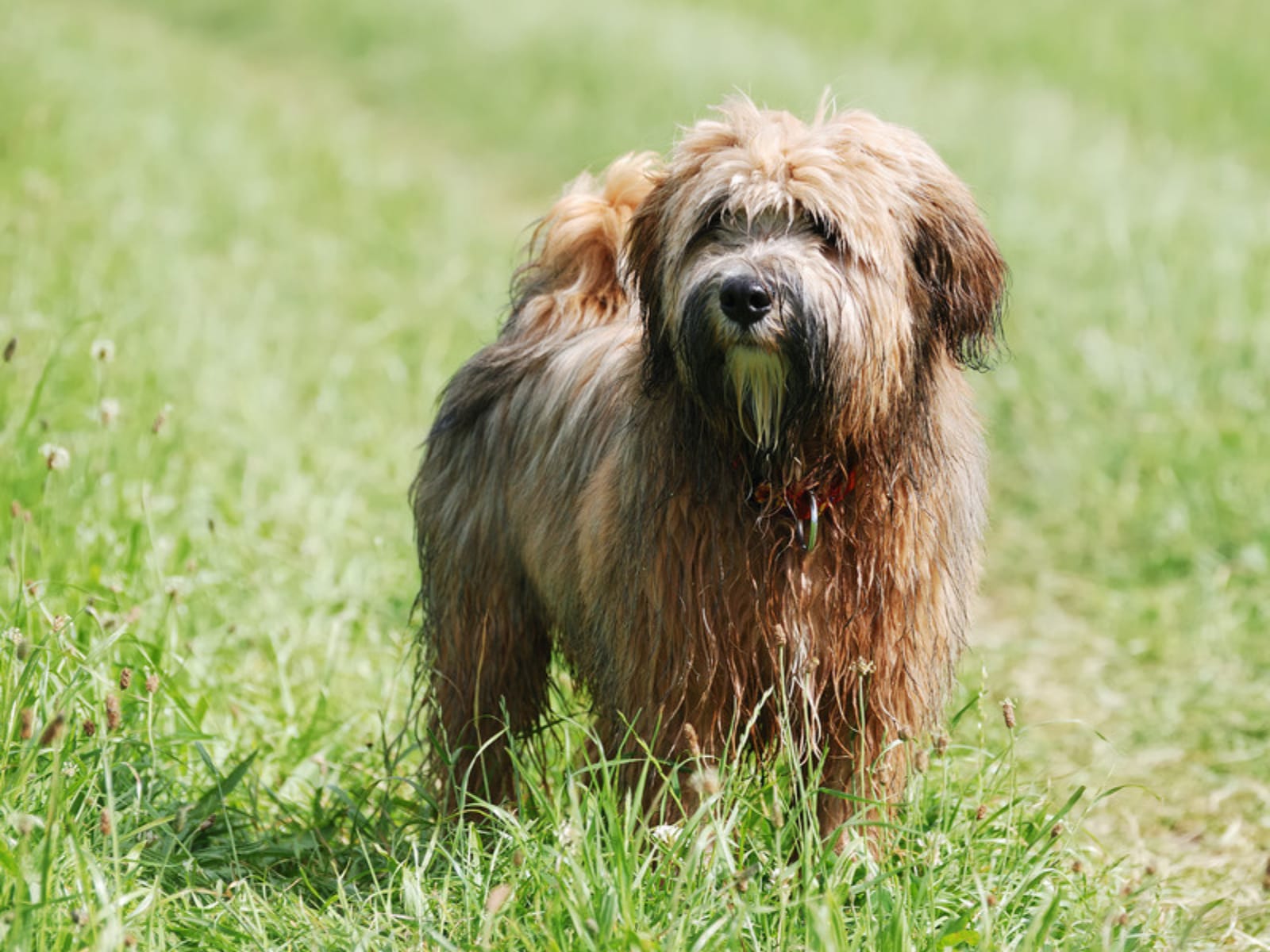
Tibetan Terrier standing in tall grass

Breed facts

FCI
no. 209 · group 9, Tibetan breeds
Origin
Tibet (China)
Height at withers
36–41 cm
Size
That is for males; females are slightly smaller.
Exercise
up to 1 hour a day (according to the Royal Kennel Club)
Lifespan
over 12 years
Coat
long, sheds little

The GoPuppy profile

These are breed averages and our own assessment. Your own dog’s age, fitness and training matter more.

  1. WalkingLong walksThe Royal Kennel Club gives up to an hour of exercise a day. He happily walks further, cold weather included.
  2. Dog sportScent work and one sportAgility, hoopers and scent work suit a lively dog.Suitsagilityhoopersscent work
  3. Terraces and cafésTerrace with some practiceThe standard calls him lively and good-natured, but sparing of affection to strangers.
  4. Travel and staysTravels with some planningMedium-sized and easy to take along.
  5. CityTown or villageThe Royal Kennel Club suggests a small house with a small to medium garden, in town or country.

Character

According to the FCI standard, the Tibetan Terrier is lively and good-natured, a loyal companion with many engaging ways. He is outgoing, alert, intelligent and game, neither fierce nor pugnacious. He is sparing of affection to strangers.

Origin

Despite the name he is not a terrier, but a herding dog that also guarded traders on their journeys to and from China. The standard calls him possibly the original Holy Dog of Tibet. According to the Royal Kennel Club, he is closely related to the Lhasa Apso, and he left Tibet in the 1920s thanks to Dr Greig, an English surgeon working in a hospital on the border with Tibet. The Kennel Club recognised the breed in 1937. The FCI places him in Group 9, section 5, Tibetan breeds.

Coat and health

The Royal Kennel Club lists him among dogs that do not shed; the long coat needs daily care. For breeders, the RKC lists DNA tests for NCL12, primary lens luxation (PLL), two forms of PRA and pituitary dwarfism (DP-LXH3), plus hip and eye testing.

Size

Males measure 36 to 41 cm; females are slightly smaller.
Health: what a good breeder tests for

  • DNA test for NCL12
  • DNA test for primary lens luxation (PLL)
  • DNA test for PRA (rcd4 and PRA3)
  • DNA test for pituitary dwarfism (DP-LXH3)
  • Hips (X-ray, official result)
  • Eye testing

Ask for the parents’ results when you visit a litter. This is not medical advice; your vet knows your dog.

Breeders of this breed on GoPuppy

No breeder of this breed on GoPuppy yet.

GoPuppy does not check breeders’ health tests. A listing here is not a seal of approval.

Read also