Buying a puppy: how do you spot a reliable dog breeder?
Buying a puppy? What to check for regarding health, socialisation and paperwork before you decide, and the warning signs of a backyard breeder.
Bringing a puppy into your home is a decision for the next ten to fifteen years. And where that puppy comes from determines more than you might think: it lays the foundation for their health, their character, and how easily they settle into our human world. A good breeder doesn’t sell puppies, they give dogs a good start. Here’s how to recognise one, and how to steer clear of the rest.
This is general information, not a certification. Unsure about health or origin? Get your vet’s advice.
Always visit in person, more than once
A reliable breeder invites you to come and see for yourself, gives you the time you need, and lets you see the puppies together with their mother in the environment where they’re growing up. Pay attention to:
- The living environment. Are the puppies growing up in the home, amid the everyday bustle of the vacuum cleaner, the doorbell and visitors? That early exposure is worth its weight in gold for socialisation.
- The mother dog. Does she look healthy and relaxed, and are you genuinely allowed to see her with the puppies? A breeder who has the mother “not available right now” is a red flag.
- Calm and cleanliness. No overcrowded pens, no ten breeds at once, no assembly-line atmosphere.
- The puppies’ behaviour. Curious and playful, or fearful and withdrawn? Puppies that avoid people often missed out on early, positive experiences.
Ask about health and paperwork
A responsible breeder has this in order and is happy to show it:
- Health screenings of the parent dogs, matched to the breed (for example hip, elbow or eye tests). Ask for the actual results, not just whether it “was done”.
- Chip, vaccination and deworming, done and documented.
- A valid passport and correct identification/registration.
- A written agreement with clear terms (and what happens if things unexpectedly go wrong).
A good breeder asks just as many questions of you. Someone who wants to know whether you’re a suitable home, how much you’re around, and whether you have experience, genuinely cares where their puppies end up.
Warning signs: how to spot a backyard breeder
Be on your guard (and walk away) if:
- puppies can “go home right away”, to be picked up in a car park, at the door, or through a middleman;
- multiple breeds and always “just happen to” have puppies in stock;
- no sight of the mother or of the living environment;
- no or vague paperwork, no health tests;
- prices that seem too good to be true, or, conversely, absurdly high for “rare” colours;
- pressure to decide quickly or pay in cash.
Behind a suspiciously cheap or “instant” puppy there’s often suffering you don’t see: mother dogs being worn out, puppies taken from their litter too early, and health or behavioural problems that only surface later.
Another path: adoption
A reliable breeder isn’t the only good route. In shelters or breed-specific rescues, plenty of dogs (puppies and adults alike) are waiting for a second chance. A good shelter knows its dogs, thinks along with you about the right match, and supports you after the adoption. Especially if you’re looking for a calm, slightly older dog, that’s often the nicest choice.
Take your time
Feeling pressured? Walk away. A responsible breeder sometimes has a waiting list, and that’s actually a good sign. Patience now often means fewer health and behavioural problems (and less cost and worry) later. After all, you’re choosing a family member for the next fifteen years.
On GoPuppy we list dog-friendly places and services in Belgium and the Netherlands. Know a breeder, dog training school or rescue that shares this careful approach? Add the place and help future owners make a good choice.
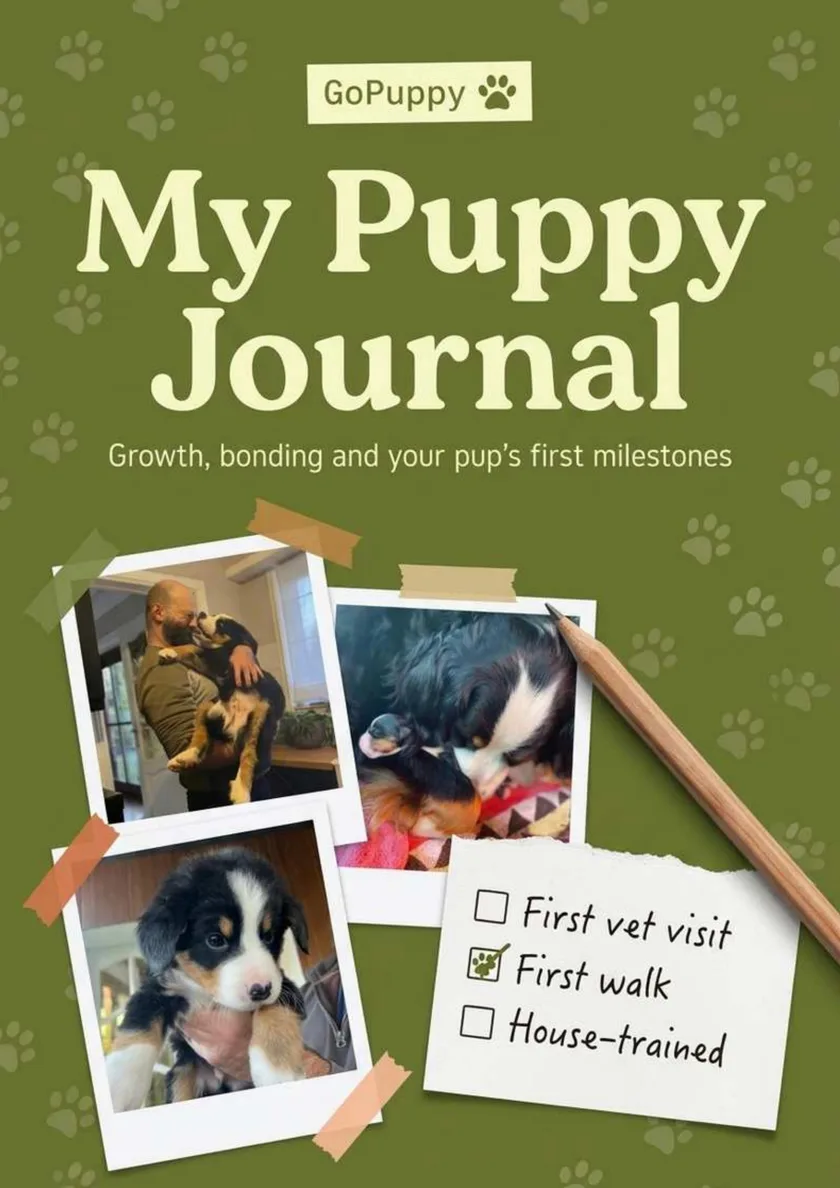
Bringing your pup home soon? Our own book, My puppy journal, helps you record their first year, step by step, with guidance for every stage and room for photos and milestones.