Walking your dog in winter: cold, road salt and paws
Your dog wants to go outside in the cold months too. Here's how to keep him warm, protect his paws from road salt and ice, and stay safely visible.
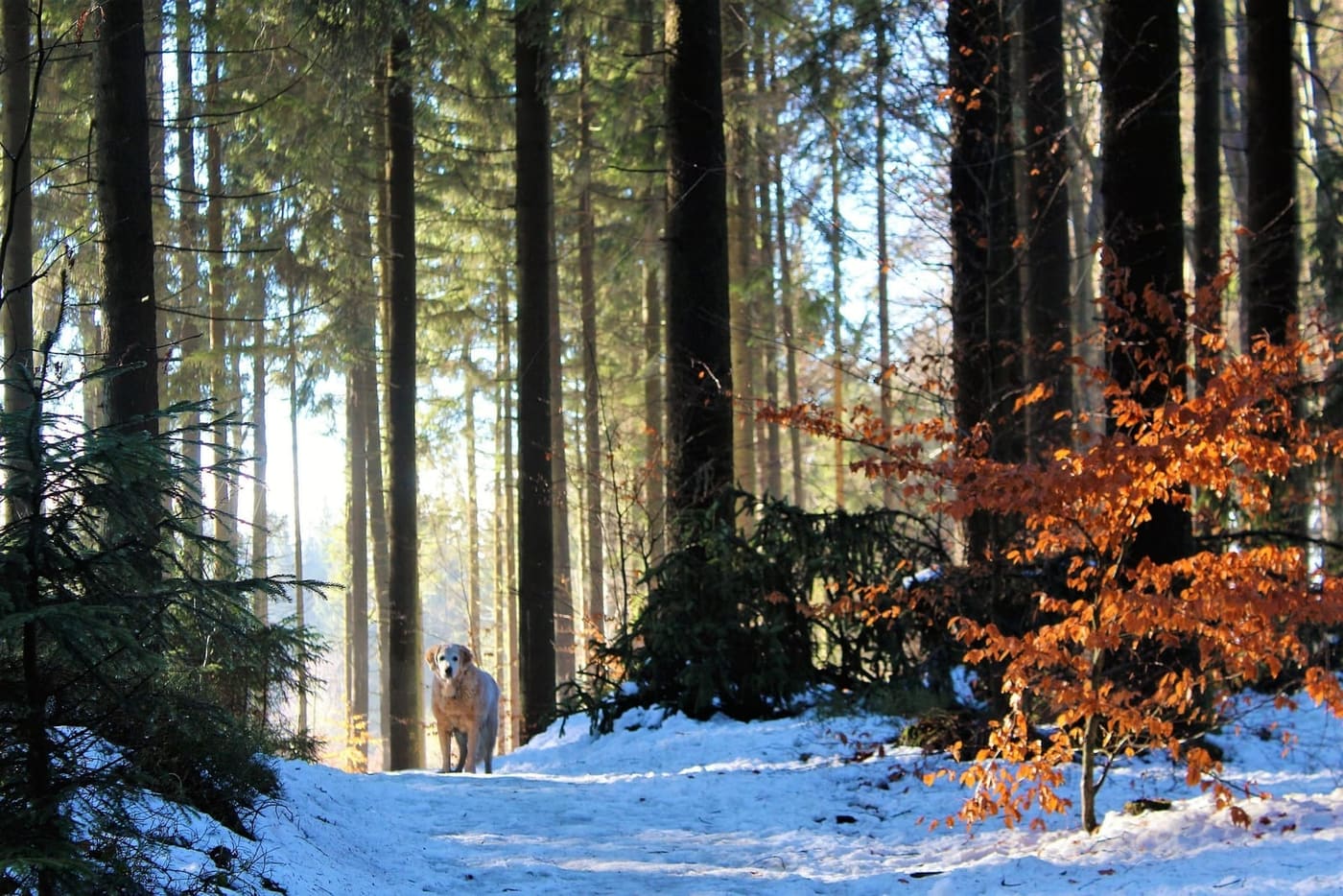
A crisp winter walk has something magical about it: crunching snow, a silent forest, a dog bounding through the white. Most dogs have no trouble with the cold, as long as you pay attention to a few things. That way you can both enjoy it, even when it’s freezing.
Is your dog feeling the cold?
That varies a lot. Dogs with a thick, double coat (spitz breeds, herding breeds) are in their element in the cold. But short-haired dogs, small dogs, puppies, older dogs and dogs with little body fat cool down faster. Signs your dog is too cold: shivering, lifting their paws, resisting going further, hunching up. For those dogs, a well-fitting dog coat isn’t a luxury but genuine comfort. In severe cold, keep the walk a bit shorter and more active.
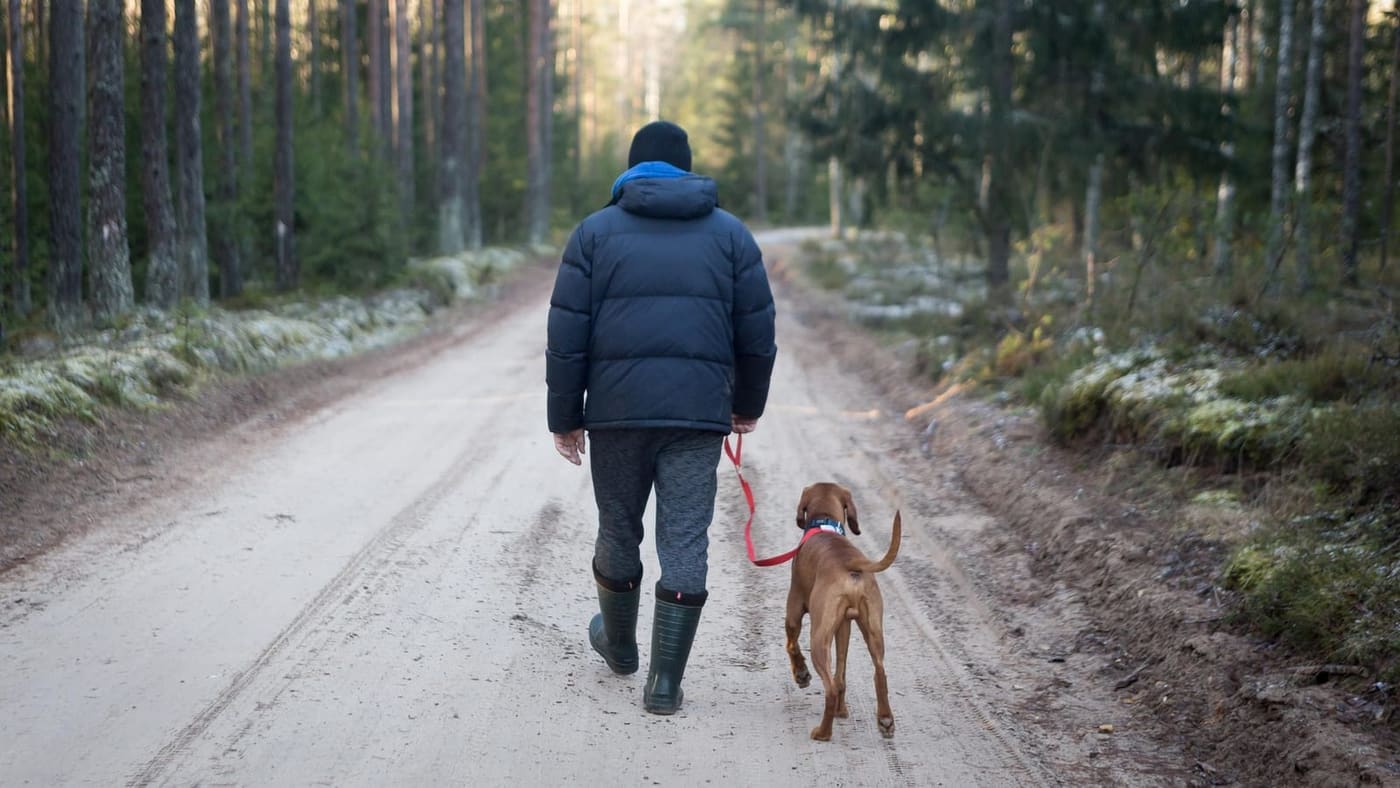 Keep moving: an active walk keeps your dog warmer than standing still in the cold for long.
Watch out for road salt and ice
- Road salt irritates the paw pads and isn’t healthy if your dog licks it off his feet. Rinse or wipe the paws after a walk through gritted streets. Paw wax or balm protects sensitive pads in advance, and helps prevent them cracking or flaking.
- Ice and frozen water. Never walk out onto a frozen-over pond or river, the ice often won’t hold, and a dog who breaks through is in mortal danger. Stick to safe paths, and keep a water-loving dog on the leash near any frozen surface.
- Snowballs between the toes. In long-haired dogs, snow clumps together between the toes. Keep the fur there trimmed short, and check the paws along the way; a clump left too long can become painful and irritate the skin.
- Slippery pavements. It’s not just you who can slip, a dog can shoot out from under themselves on an icy pavement too, with a sprain or worse as a result. Where possible, choose an untreated path or the grass verge instead.
Joints and older dogs
Cold can make stiff joints feel worse, especially in older dogs or dogs with arthritis. A short warm-up (walking gently before picking up the pace), a coat that keeps the back and lower back warm, and a softer surface where possible all make a difference. Notice your dog coming out of their bed stiffer, or slowing down as it gets colder? Feel free to mention it to your vet, sometimes a small adjustment to the daily routine already helps a lot.
Visibility in the dark
Winter means a lot of walking in the dark. Make yourself, and your dog, clearly visible with a reflective harness, a light-up collar or a small light. That way cars, cyclists and other walkers spot you in time, and you don’t lose sight of your dog on an unlit path. In the dark, it’s worth sticking to a fixed, familiar route, you’ll be less caught out yourself by a hole, a root or a slippery patch.
Warm weather, cold weather, always outside
Exercise and fresh air are good for your dog all year round; you just adapt it to the season. Read about the other side of the year in our piece on dogs and heat, or the months in between in walking in autumn. Looking for a nice winter walk? Check out the nature spots on GoPuppy.
Frequently asked questions
Does my dog need a coat in winter? For short-haired, small, young or older dogs, and dogs with little body fat, a well-fitting coat is genuine comfort, not a luxury. Dogs with a thick double coat usually don’t need one.
Is road salt dangerous for dogs? It irritates the paw pads and isn’t healthy if your dog licks it off. Rinse or wipe the paws after a walk through gritted streets, and consider a protective paw wax.
Can my dog walk on frozen water? No, never. Ice on ponds, canals and rivers often doesn’t hold reliably, and a dog who breaks through is in mortal danger. Stick to safe, solid paths.
Does my dog need to eat more in winter? A dog that’s very active outdoors, or partly sleeps outside, burns more energy staying warm and may need a bit of extra food. A dog that’s mostly indoors with shorter walks generally doesn’t, when in doubt, ask your vet for tailored advice.
How long can a winter walk be? That depends on your dog: a healthy, well-insulated dog can happily stay out a long time as long as they keep moving. Short-haired, small or older dogs do better with shorter, more active walks and more frequent warm breaks indoors.