Temperament
According to the FCI standard the Cardigan is alert, active and intelligent. He is steady, neither shy nor aggressive. The standard describes a sturdy, tough, mobile dog capable of endurance.
How it differs from the Pembroke
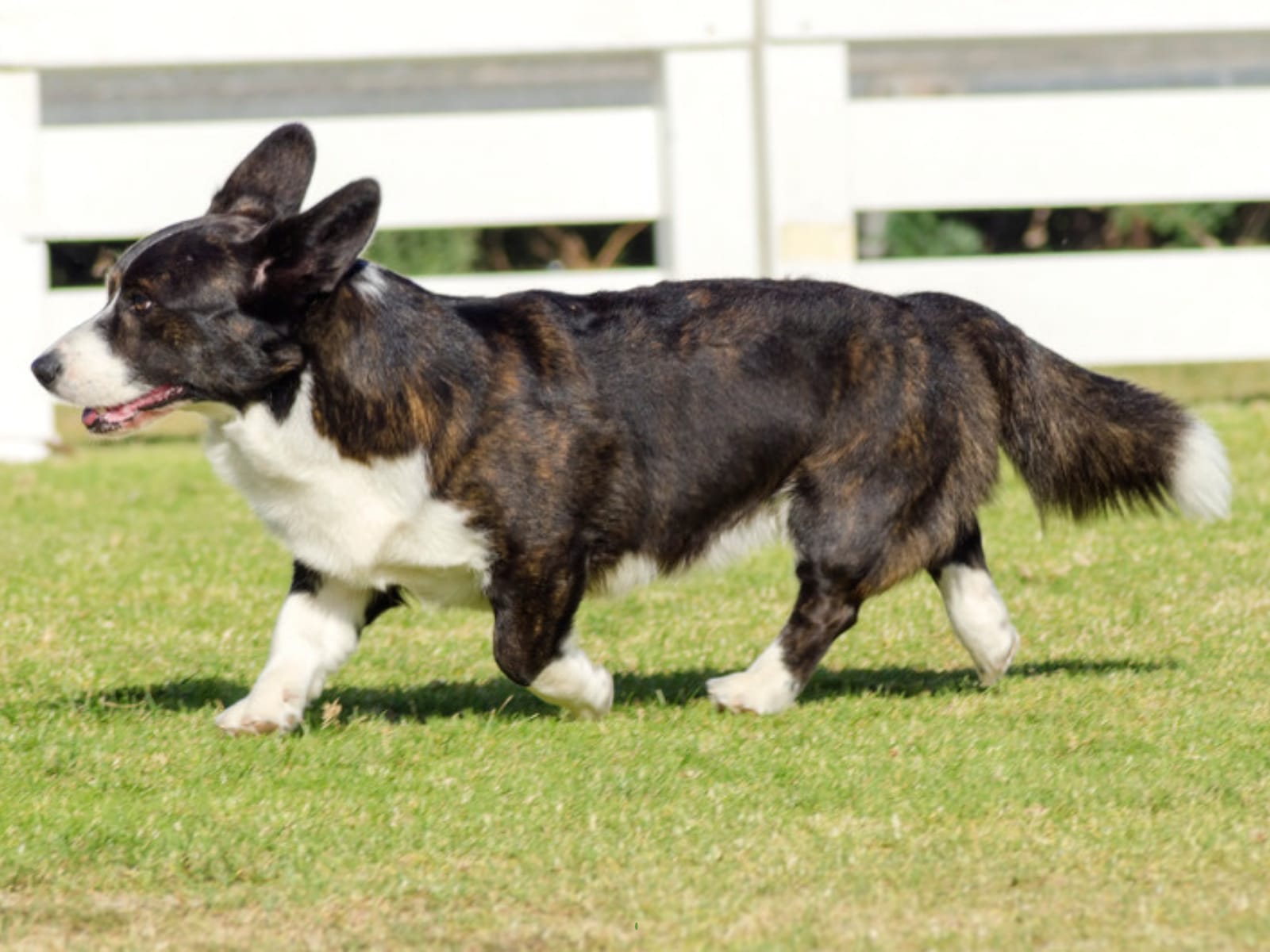
The Cardigan and the Pembroke Welsh Corgi are two separate breeds. The most obvious difference is the tail: the Cardigan has a long tail like a fox’s brush that touches or nearly touches the ground. According to the Royal Kennel Club it has always been undocked. He is longer in the body and his front legs are slightly bowed. His erect ears are rather large for his size. The two breeds were once allowed to interbreed freely. In 1934 the Kennel Club recognised them as separate breeds.
Origin
According to the Royal Kennel Club the Cardigan is thought to be the older of the two. The word corgi is thought to come from the Celtic cor (dwarf) and gi (dog). Their short legs made both corgis good heelers for driving livestock forward. By day they drove cattle, at night they guarded them. The Cardigan was once known as the Yard Dog, because he measured a Welsh yard from nose to tail tip, about 102 cm. The FCI places him in Group 1, Section 2, cattle dogs.
Health
The Royal Kennel Club prioritises genetic diversity and lists a DNA test for PRA (rcd3) and eye and hip testing.
Size
The ideal height at the withers is 30 cm. Weight should be in proportion to size.