The daily walk: get more out of it
Same loop every day? With a few small tweaks, the daily walk becomes a real outlet for both your dog's body and mind.
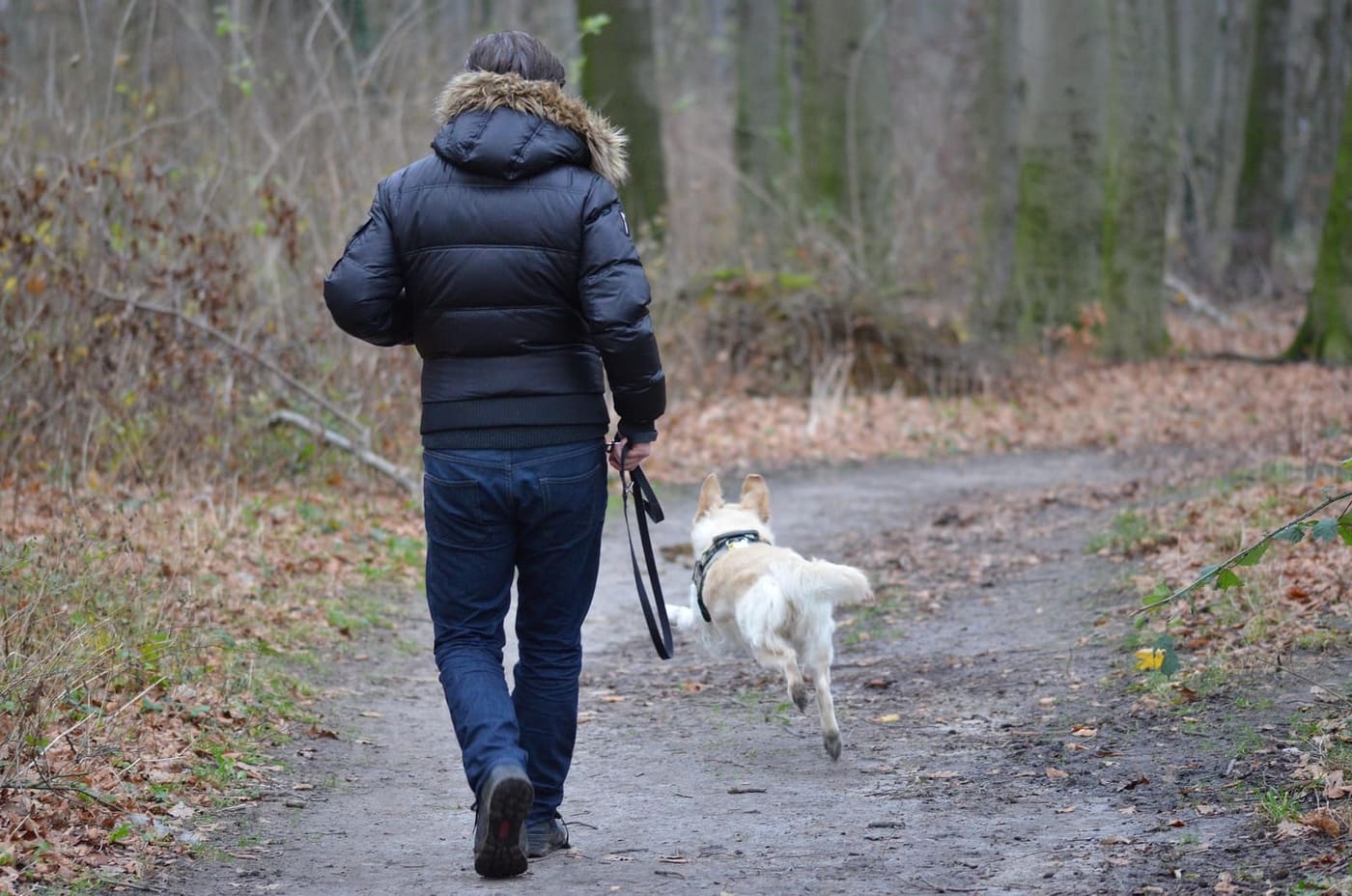
The daily walk is the highlight of the day for many dogs. Yet it easily settles into the same loop, at the same pace, nose forward. A shame, because with a few small tweaks, that same walk becomes much more valuable, without needing to take any longer.
Let your dog sniff
For a dog, the world is one big map of scents. Sniffing isn’t “wasting time”, it’s mental exercise that’s at least as tiring and satisfying as physical effort. A dog allowed to freely smell a lamppost, a tuft of grass or a tree trunk is processing a wealth of information. Give them those sniffing breaks; half an hour of really smelling often does more than an hour of brisk walking. Want to put sniffing fully centre stage, without distraction from other dogs? Check out the sniffing gardens on GoPuppy.
Vary your route
The same path every time becomes predictable. Mix it up:
- Different places. Forest, heathland, a towpath along the water, a park further away, every environment smells and feels different.
- Different times. The world smells different (and fresher) early in the morning than in the evening.
- Different surfaces. Sand, grass, forest path: variety is good for the paws and for the mind.
New stimuli keep your dog curious and engaged, and make the walk more enjoyable for you too.
Build in small exercises
You don’t need to run a training session to make the walk more valuable. Sprinkle in a few mini moments:
- Recall from a distance, with a reward, wherever off-leash is allowed and safe, for example in an off-leash area.
- A brief wait at a crossing or a bench.
- Search games: toss a handful of kibble in the grass and let your dog “search”.
- Suddenly changing direction, so your dog stays tuned in to you.
That way the walk also becomes a moment of teamwork, good for the bond between you and for your dog’s focus.
How long is long enough?
There’s no universal number, it depends on breed, age, energy level and fitness. A young shepherd or collie generally needs more than a calm, older molossoid. More important than the exact distance is quality: a shorter walk with plenty of sniffing moments and variety can be more satisfying than a long, monotonous loop on the same pavement. Not sure whether your dog is getting enough exercise, or noticing restlessness or weight gain instead? Feel free to raise it with your vet.
Multiple dogs, multiple needs
If you walk more than one dog, the shared walk is good for the bond between them, but it doesn’t fully replace individual attention. Build in a moment now and then where you give each dog a short exercise or sniffing break on their own, for recall and search exercises especially, that tends to work better one-on-one than with the whole group at once, and it stops the calmest or least confident dog getting overlooked.
Think about the season
Every walk adapts to the weather: early and in the shade in summer (dogs and heat), well visible and mindful of paws in winter (walking in winter). And everywhere: on a leash where required, and cleaning up after your dog.
Find new places to walk
Looking for a new loop to break the routine? Discover off-leash areas near you on GoPuppy, or add your favourite walk so others can find it too. Can’t manage it yourself for a while? A dog walking service can step in.
Frequently asked questions
How long should the daily walk last? That depends on breed, age and fitness: a young, energetic dog often needs more than a calm older dog. Quality (sniffing, variety) counts at least as much as the number of kilometres.
Is sniffing as tiring as walking? Yes, sniffing is mental exercise: your dog is processing a wealth of information through their nose, and that takes energy. Half an hour of real sniffing can be at least as tiring as an hour of brisk walking.
How do I combine the walk with multiple dogs? Give each dog individual attention and moments too, alongside the shared walk, especially for recall and search exercises, that tends to work better one-on-one than as a group.
Can I replace the daily walk with just a garden? No, a garden doesn’t offer new scents, stimuli or social context. Even with a large garden, a walk off your own property remains valuable for your dog’s mental health.