Dogs and livestock: staying safe around pastures and herds
Sheep, cows, horses, you'll encounter them in nature areas. Here's how to walk past them respectfully and safely, for your dog and the animals alike.
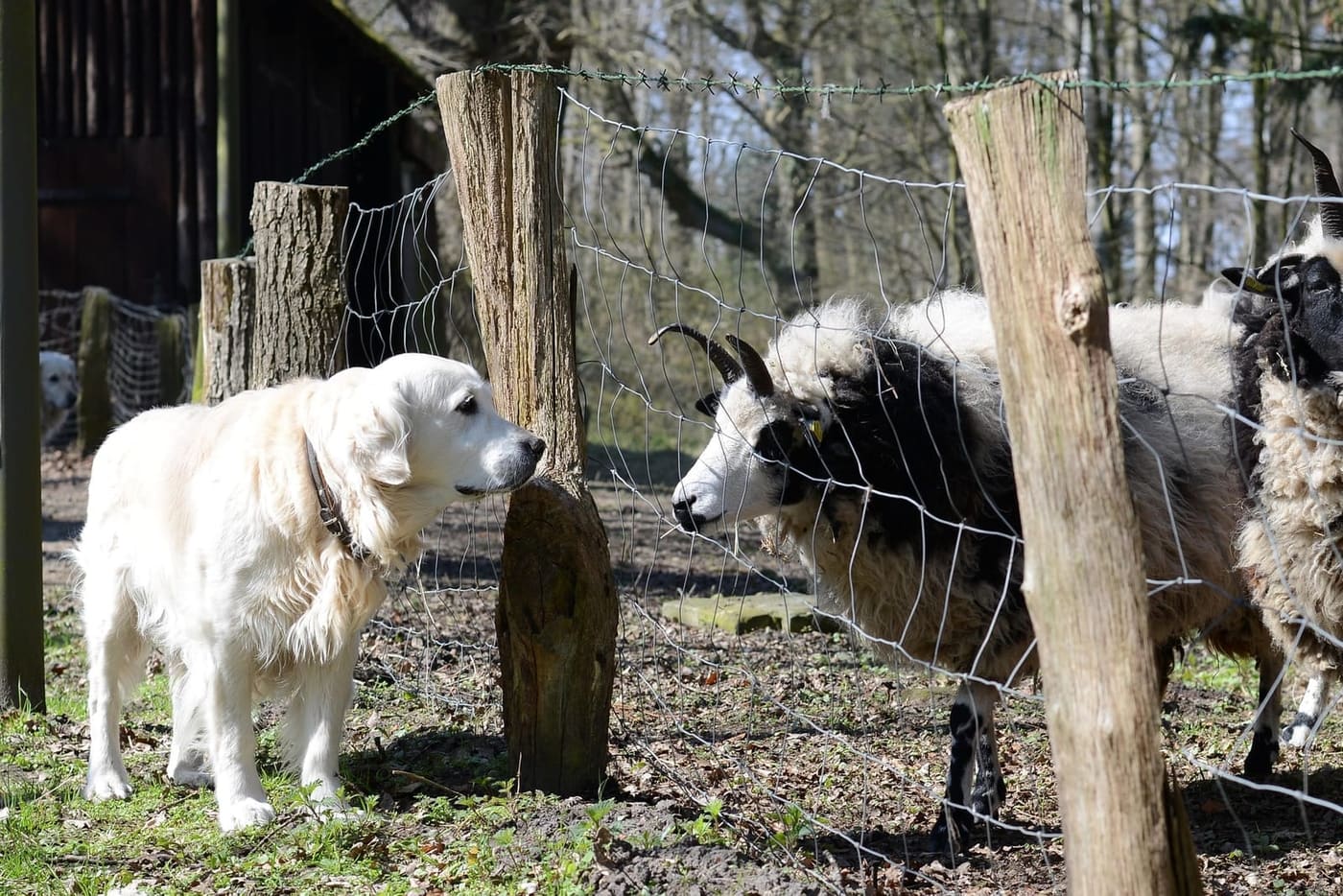
Many of the loveliest walking areas are grazed by sheep, cows or horses, sometimes as nature management, sometimes simply as pastureland. To your dog, a herd like that is endlessly fascinating; for the animals and the farmer, a loose dog can be a real problem. With a bit of common sense, you can walk past without any worries.
Why leashing here isn’t just a detail
Even a sweet, well-meaning dog can spook livestock. To a sheep or a cow, an approaching dog looks like a predator: they bolt, panic, and that can lead to injuries, fatal stampedes, or (in pregnant animals) miscarried young. That’s why a leash requirement applies in or alongside grazed areas almost everywhere, and for good reason. In many regions, a farmer is even legally allowed, as a last resort, to stop a dog that’s threatening livestock. In short: around livestock, the leash goes on, full stop.
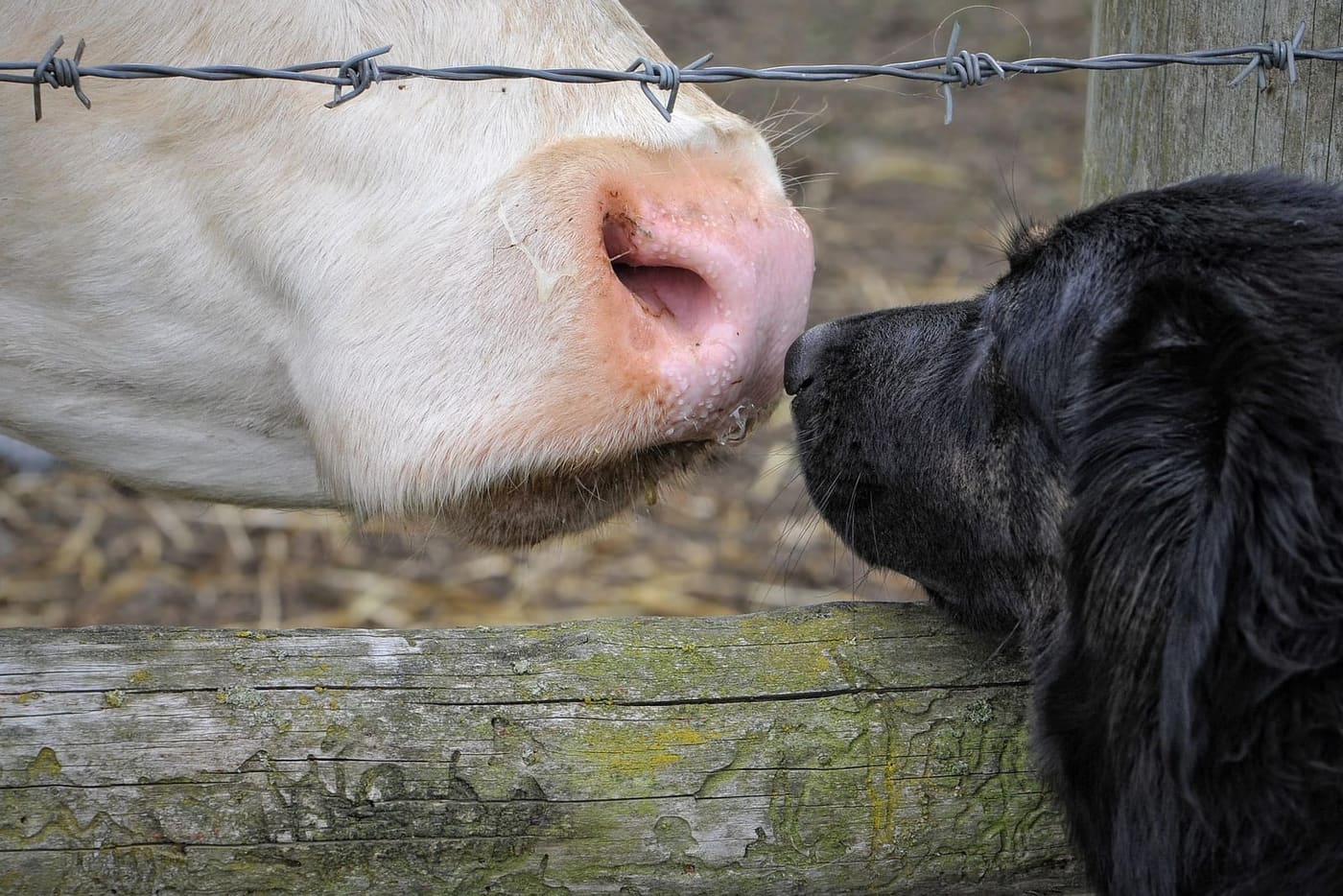 A curious sniff over the fence is fine, but always on a leash, and with a calm dog.
How to approach it
- Leash on before you reach the animals, not only once things go wrong. Keep your dog close and on a short leash.
- Stay on the paths and respect fences and gates. If you open a gate, close it again behind you.
- Keep your distance. Walk calmly and give the herd a wide berth; never walk through the middle of it.
- Cows with calves can be fiercely protective. If a herd seems agitated or starts moving towards you, calmly but firmly make your way out. If a cow actually starts to chase, letting go of the leash is the safest choice: the cow will then focus on the dog (who’s faster and can escape more easily) rather than on you.
- Horses startle at sudden movement; approach calmly and predictably.
Sheep vs. cows: small differences
The basic principle, keeping your distance and leashing up, applies to any type of livestock, but the behaviour differs slightly. Sheep tend to flee fast and together as a group at the slightest threat, which is dangerous enough on its own (panic, injuries, pregnant ewes losing their lambs). Cows flee less readily, but when they feel threatened, especially with calves nearby, they can instead react defensively and aggressively towards the dog and its owner. If you don’t know the behaviour of the animals in a specific area, always assume that caution is never overdone.
An empty field isn’t an off-leash area
If you come across a field with no livestock in sight, that’s still not a free pass to let your dog off-leash. Farmland remains private or working land, often with electric fencing, young crops, or hay still growing. Only let your dog off-leash in an officially designated off-leash area, or with the owner’s explicit permission.
Train a reliable recall
Even where off-leash walking is allowed, you want a dog that comes back immediately the moment livestock comes into view. Practise that recall with a long line and plenty of rewards, so that “come to me” is stronger than the urge to chase a sheep. Read more about that in our piece on off-leash rules.
Something happened anyway? Report it
If your dog has chased a sheep or cow anyway, always report it to the owner or farmer, even if nothing seems wrong at first glance. Stress in pregnant animals can only show effects days later, and the owner can then keep a timely eye on things. Treat it as a learning moment: from now on, deliberately choose more distance or a different route through that area.
Enjoy it, respectfully
Grazed nature areas are among the loveliest places to walk, precisely because animals live there. Do your part by keeping your dog under control and preserving the calm. Looking for a walking area nearby? Browse the nature spots on GoPuppy.
Frequently asked questions
Does my dog always need to be on a leash around livestock? Yes, a leash requirement applies in or alongside grazed areas almost everywhere. Even a sweet, calm dog can spook livestock, the leash goes on before you reach the animals, not only once things go wrong.
What do I do if a cow starts chasing my dog? Let go of the leash. The cow will then focus on the dog (who’s faster and can escape more easily) rather than on you. Then calmly find a safe way out yourself.
Is off-leash safety around sheep different from cows? The principle is the same: both can panic at an approaching dog, leading to injuries or miscarried young. Sheep tend to flee faster as a group; cows with calves may instead react defensively and aggressively.
Can I let my dog off-leash in a field with no livestock in sight? Only if it’s a designated off-leash area or you have the owner’s explicit permission. An empty field is still private or agricultural land, possibly with electric fencing or young crops.
What if my dog has chased a sheep or cow anyway? Always report it to the owner or farmer, even if nothing seems wrong at first glance, stress in pregnant animals can only show effects days later. From then on, deliberately choose more distance or a different route.