Children and dogs: building a safe friendship
A dog and a child can become the best of friends, with the right guidance. Here's how to lay the foundation for safe, respectful time together.
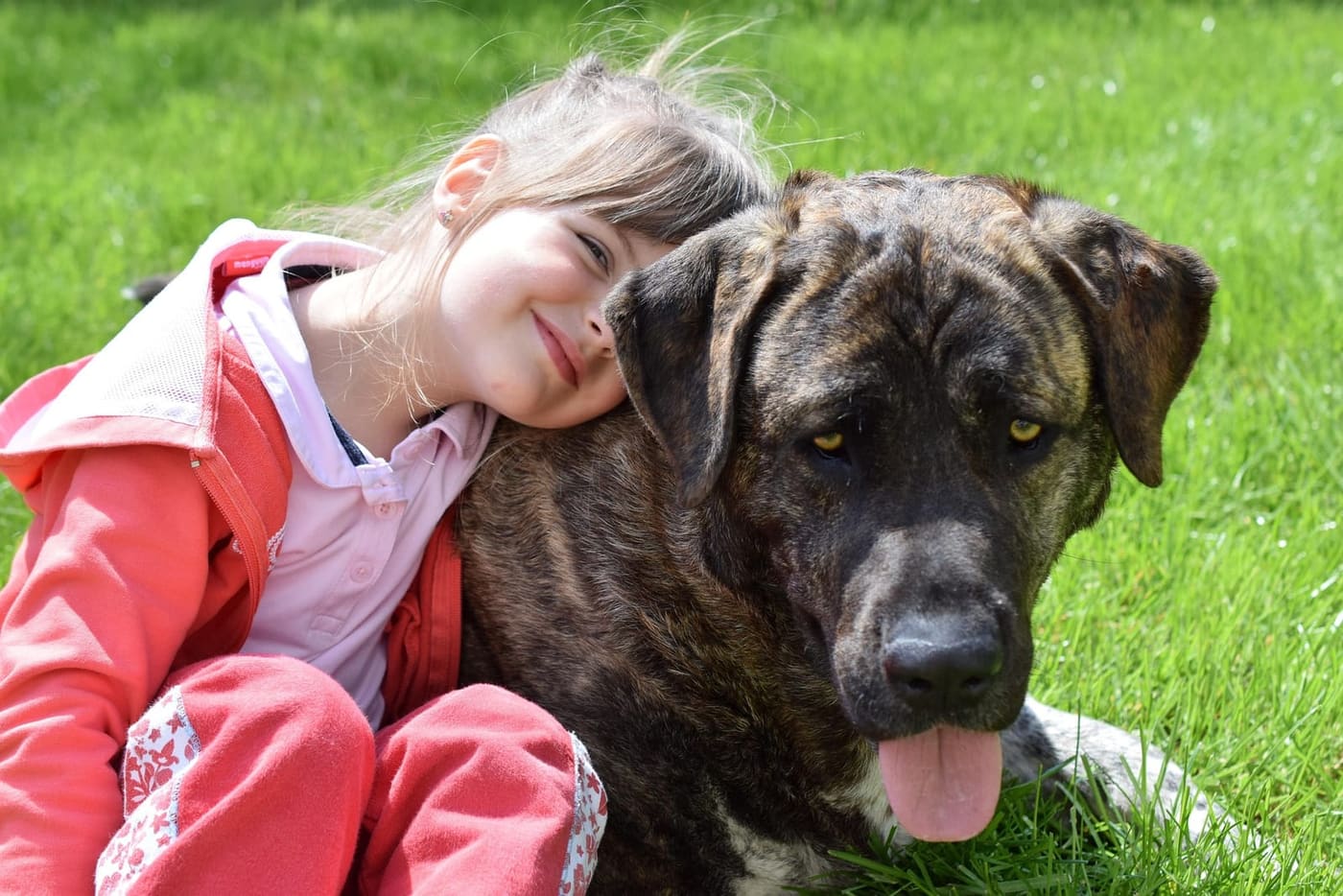
A child growing up with a dog, there’s little more wonderful. It teaches children care, responsibility and empathy, and it gives dogs a life full of companionship. But that friendship doesn’t happen on its own, it takes guidance. Here’s how to build a bond that’s safe and rewarding for both.
The most important rule upfront: never leave young children and dogs together unsupervised. Even the sweetest dog can get startled or be in pain.
Teach your child the dog’s language
Dogs speak with their bodies. Teach your child (at their level) the signs that a dog isn’t enjoying something right now:
- walking away or turning its head away
- lip licking, yawning without being tired
- the whites of the eyes showing (“whale eye”)
- going stiff, a low growl
Growling isn’t misbehaviour, it’s communication: the dog is saying “give me space.” Don’t punish it away, instead, teach your child to listen to it. A dog that learns growling gets punished sometimes simply skips that warning next time, without the underlying tension being resolved, which is far riskier. For more on these signals and how they escalate as tension rises: dog body language: reading stress signals.
House rules that work
A few clear agreements prevent most problems:
- Leave the dog alone while eating and sleeping. The bed and the food bowl are the dog’s safe zone, nobody touches those.
- No hugging around the neck or on top of the dog. Many dogs find that stifling, even if they tolerate it.
- Approach calmly, no chasing. No pulling ears or tail, no screaming or running after the dog.
- The dog may always leave. Provide a spot where the dog can retreat, and teach your child to respect it.
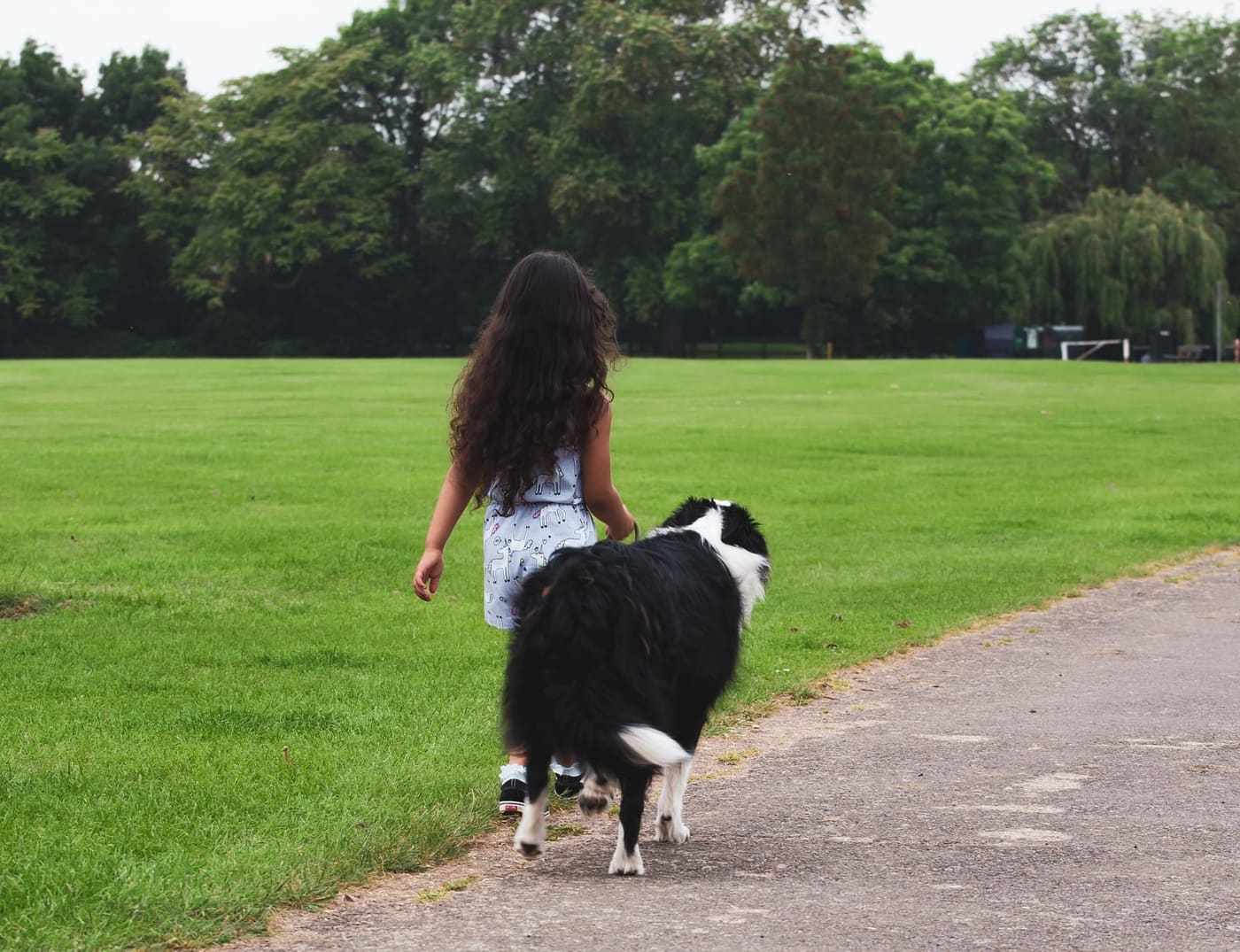 Out together under supervision: a child who handles the dog calmly naturally builds trust.
Involve your child, at their own pace
Children who help out build a bond faster. Give age-appropriate little tasks: filling the water bowl together, giving a treat with a flat hand, joining a calm walk. What age a child can walk the dog alone doesn’t come down to a fixed number, but to a combination of factors: how big and strong is the dog, how reliable is their obedience, and how well can the child judge risk? Build it up step by step, first together, then at a short distance within your sight, before letting a child walk the dog fully independently. That way your child becomes a familiar, predictable presence for the dog, and respect grows naturally.
A new baby in a family with a dog
If a baby is joining a family that already has a dog, prepare the dog gradually: get them used to baby sounds (play a recording or baby monitor audio in advance), to the smell of baby care products, and practise calm behaviour around a pram. Try to keep your dog’s usual routines (walks, mealtimes, rest spots) as unchanged as possible, especially during the busy first weeks. Notice your dog reacting with noticeable stress to these changes? Talk to a dog training school or behaviourist in good time, ideally before the baby arrives rather than after.
When professional help is worthwhile
If your dog stays clearly stressed around children (persistent panting, refusing to eat, continually retreating, or increasing growling instead) don’t wait it out. Give the dog space immediately, and seek professional help from a dog training school or a certified behaviourist. See also our guide on dog behaviour therapy: what is it for what such a process involves.
A new dog in a family with children
If you’re choosing a dog, look beyond appearance: temperament and energy level matter more than breed. There’s no universal “kid-friendly breed”, socialisation and individual upbringing matter at least as much. A good breeder or a shelter that knows its dogs well can help you find a match that suits a busy family. And a dog training school helps the whole family stick to the same, clear approach from day one.
With patience, supervision and respect for each other’s boundaries, a friendship for life grows between child and dog. Looking for a dog training school or other services nearby? Browse them on GoPuppy.
Frequently asked questions
At what age can a child walk a dog by themselves? That depends on both the child and the dog: the dog’s size and pulling strength, how reliable their obedience is, and the child’s judgement all play a role. Only let a child walk a dog alone once you have, after repeated supervised walks, full confidence in both of them.
Is growling at a child a sign the dog is dangerous? No, growling is communication, not aggression in itself, the dog is saying “give me space.” Don’t punish it away, since that can remove the warning without resolving the underlying tension. Do take it seriously and work out what’s bothering the dog.
Which dog breed suits a family with children best? There’s no universal “kid-friendly breed”, an individual dog’s temperament, socialisation and upbringing matter more than breed. A good breeder or shelter will help you find a match based on energy and temperament, not just looks.
How do I prepare my dog for a new baby? Gradually get them used to baby sounds and smells, practise calm behaviour around a pram or baby items, and keep your dog’s routines as unchanged as possible. Consider discussing this in good time with a dog training school if your dog stresses easily.
What do I do if my dog is clearly stressed by a child? Give the dog room to move away straight away, and provide a fixed, calm spot where they can retreat. If the tension persists, professional help from a dog training school or behaviourist is a good next step. See also our guide on dog behaviour therapy.