FCI 75 · Great Britain

Skye Terrier

One of the oldest Scottish breeds, once known as the Terrier of the Western Isles.

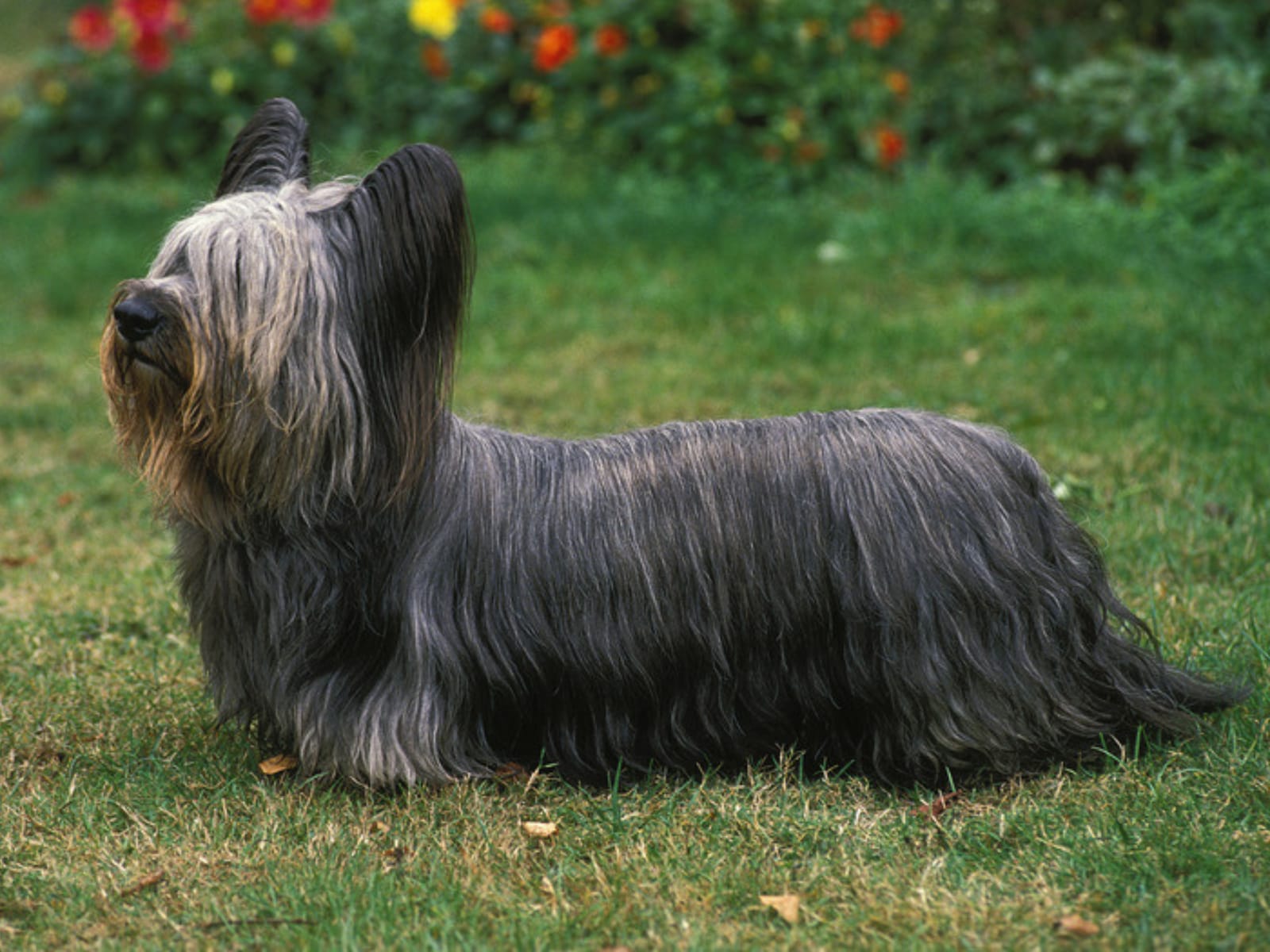
Grey Skye Terrier standing on the grass

Breed facts

FCI
no. 75 · group 3, small terriers
Origin
Great Britain
Height at withers
25–26 cm
Size
The standard gives 25 to 26 cm as the ideal height and 105 cm from nose to tail tip; bitches slightly smaller.
Exercise
up to 1 hour a day (according to the Royal Kennel Club)
Lifespan
over 12 years
Coat
long, sheds

The GoPuppy profile

These are breed averages and our own assessment. Your own dog’s age, fitness and training matter more.

  1. WalkingOne to two hoursThe Royal Kennel Club gives up to an hour of exercise a day.
  2. Dog sportCalm gamesScentwork and obedience suit a calm, dignified terrier.Suitsscent workobedience
  3. Terraces and cafésTerrace after trainingThe standard calls him distrustful of strangers, but never vicious.
  4. Travel and staysTravels with some planningSmall, easy to take along.
  5. CityTown or villageThe RKC suggests a small house with a small to medium garden, in town or country.

Temperament

According to the FCI standard the Skye Terrier is elegant and dignified. He is a one-man dog, distrustful of strangers and never vicious.

Origin

He is one of the oldest Scottish breeds and was once called the Terrier of the Western Isles. Several breeds lie behind him, including early forms of the Cairn Terrier. The most famous Skye was Greyfriars Bobby, who around 1858 in Edinburgh kept watch at his master’s grave in Greyfriars Churchyard until he died himself. A plaque in the street and a stone on his grave remember him. Most Skyes have prick ears, but there is also a drop-eared variety. The RKC lists him as a vulnerable native breed. The Australian Terrier probably carries Skye blood. The FCI places him in Group 3, Section 2, small terriers.

Health

The Royal Kennel Club prioritises genetic diversity and lists no further tests for this breed.

Size

Ideal height is 25 to 26 cm, with a length of 105 cm from nose to tail tip. Bitches are slightly smaller in the same proportions.
Health: what a good breeder tests for

  • Prioritising genetic diversity when choosing the parents

Ask for the parents’ results when you visit a litter. This is not medical advice; your vet knows your dog.

Breeders of this breed on GoPuppy

No breeder of this breed on GoPuppy yet.

GoPuppy does not check breeders’ health tests. A listing here is not a seal of approval.

Read also