FCI 212 · Northern Russia and Siberia

Samoyed

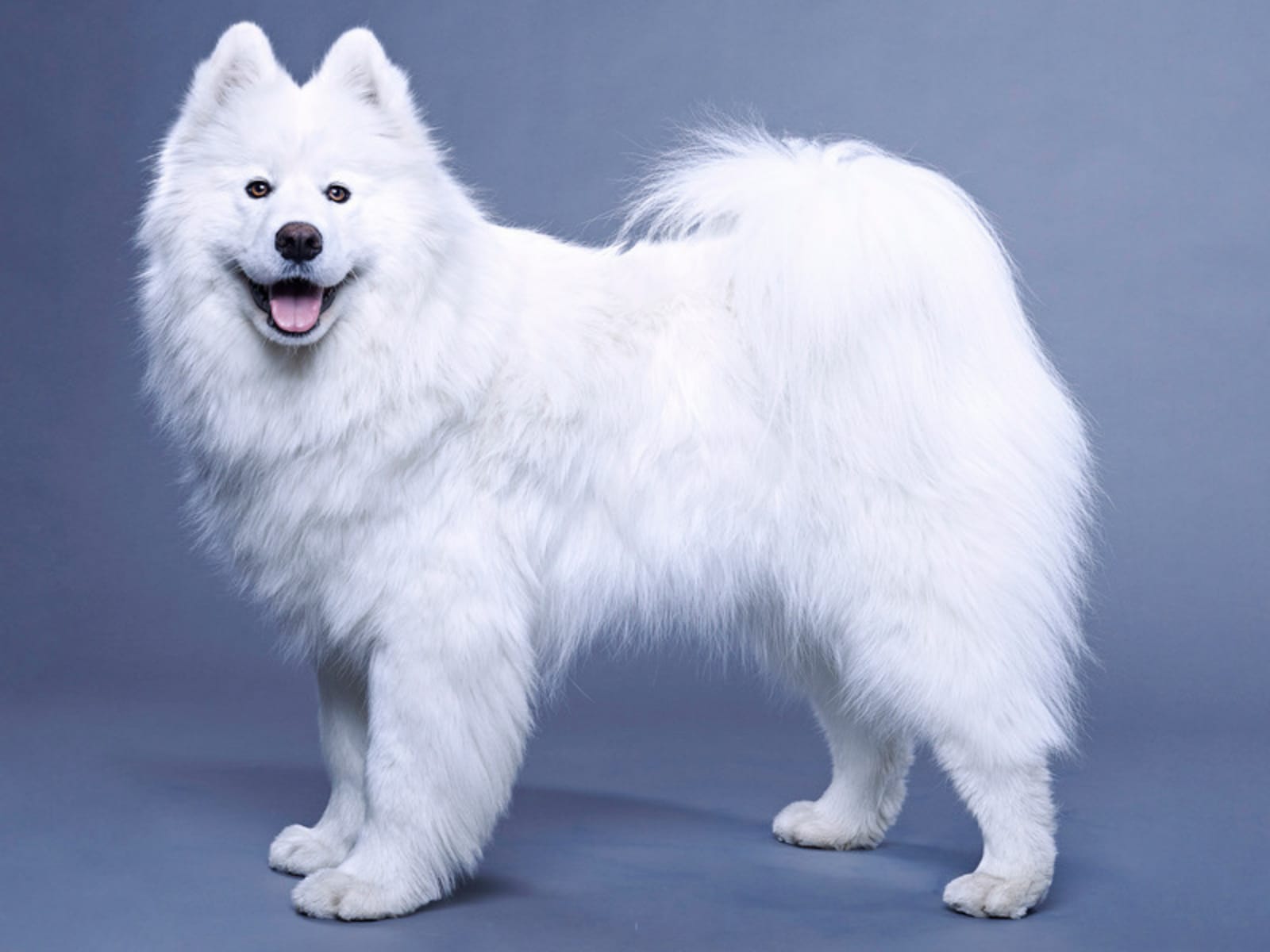
A white sled dog, named after the Samoyed peoples of northern Russia and Siberia. The dogs lived close to their owners and even slept in their shelters, as a source of warmth.

White Samoyed against a blue background

Breed facts

FCI
no. 212 · group 5, Nordic sledge dogs
Origin
Northern Russia and Siberia
Height at withers
male 54–60 cm · female 50–56 cm
Size
Ideally 57 cm for males and 53 cm for females, give or take 3 cm.
Exercise
more than 2 hours a day (according to the Royal Kennel Club)
Lifespan
over 10 years
Coat
medium length, sheds

The GoPuppy profile

These are breed averages and our own assessment. Your own dog’s age, fitness and training matter more.

  1. WalkingFull-day hikesMore than two hours of exercise a day, according to the Royal Kennel Club. An adult Samoyed will manage a full-day hike.
  2. Dog sportSport with a build-upPulling sports and canicross suit a sled dog. Wait until he is fully grown before he pulls.Suitscartingcanicross
  3. Terraces and cafésTerrace with some practiceThe standard calls him 'friendly, open, alert and lively', never shy or aggressive. So sociable that, according to the standard, he cannot be used as a guard dog.
  4. Travel and staysTravel takes preparationMedium-sized, with a dense white coat. In hot weather, keep exertion low.
  5. CityNeeds a big gardenThe Royal Kennel Club assumes a large house with a large garden, in the country.

Character

According to the FCI standard, the Samoyed is friendly, open, alert and lively. His hunting instinct is very slight, he is never shy or aggressive, and he is so social that he cannot be used as a guard dog.

Origin

The name comes from the Samoyed peoples of northern Russia and Siberia. In the south they used parti-coloured dogs as reindeer herders; in the north the dogs were pure white, mild-tempered and used for hunting and sledging. The dogs lived close to their owners and slept in their shelters. The British zoologist Ernest Kilburn Scott spent three months among the Samoyed peoples in 1889 and brought back a brown male puppy, Sabarka. A cream bitch and a snow-white male followed. These few dogs, together with those brought by explorers, are the base of the western Samoyed. The first standard was written in England in 1909. The FCI places him in Group 5, section 1.

Coat and health

The Royal Kennel Club counts on daily coat care. Breeders should do DNA tests for XLHN (an inherited kidney disease) and XL-PRA, and test hips, elbows and eyes.

Size

Ideally a male measures 57 cm and a female 53 cm, give or take 3 cm.

Health: what a good breeder tests for

  • DNA test for XLHN (hereditary nephritis) and XL-PRA
  • Hips (X-ray, official result)
  • Elbows (X-ray, official result)
  • Eye testing

Ask for the parents’ results when you visit a litter. This is not medical advice; your vet knows your dog.

Breeders of this breed on GoPuppy

No breeder of this breed on GoPuppy yet.

GoPuppy does not check breeders’ health tests. A listing here is not a seal of approval.

Read also