Temperament
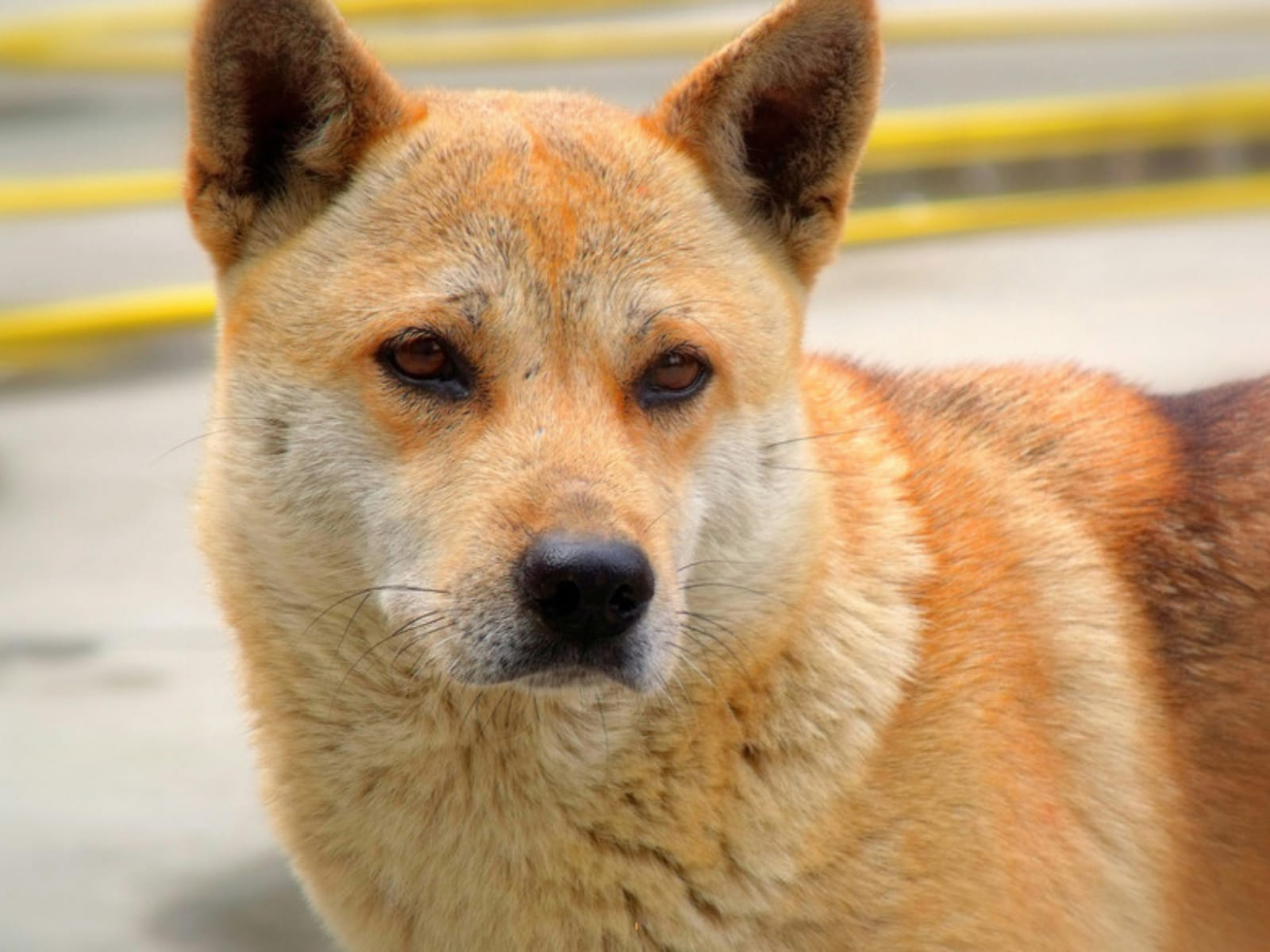
According to the FCI standard, the Jindo has a very strong hunting instinct and is bold, brave, alert and careful. Above all he is extremely faithful to his owner. He is a one-man dog: he will accept a new owner, but never forgets the one who raised him from a puppy. On the whole he is not fond of other animals, especially males. He has a good sense of direction, keeps himself clean and eats sparingly.
Origin
There is no written record of his origin, but according to the standard the breed has lived for thousands of years on Jindo Island, at the south-western tip of the Korean peninsula. The most accepted theory is that he is native to Korea and survived on the island because it was hard to reach. In Korea he is called Jindo-kae or Jindo-kyon; kae and kyon both mean dog. According to the Royal Kennel Club, the island was separated from the mainland until 1984, the breed was declared a National Treasure in 1938 and was therefore spared when the Japanese killed dogs during the Second World War. The RKC also says he was used for dog fighting in the past and remains dominant towards other dogs. Related Asian spitz breeds on GoPuppy are the Shiba Inu, the Kishu and the Akita Inu. The FCI places him in group 5, section 5, Asian spitz.
Health
The Royal Kennel Club prioritises genetic diversity and lists no further tests for this breed.
Size
Dogs measure 50 to 55 cm and weigh 18 to 23 kg; 53 to 54 cm is ideal. Bitches measure 45 to 50 cm and weigh 15 to 19 kg; 48 to 49 cm is ideal.