FCI 184 · Germany

German Pinscher

An old German breed, ancestor of the Dobermann and the Miniature Pinscher. According to the Royal Kennel Club, the word pinscher means to bite or grip.

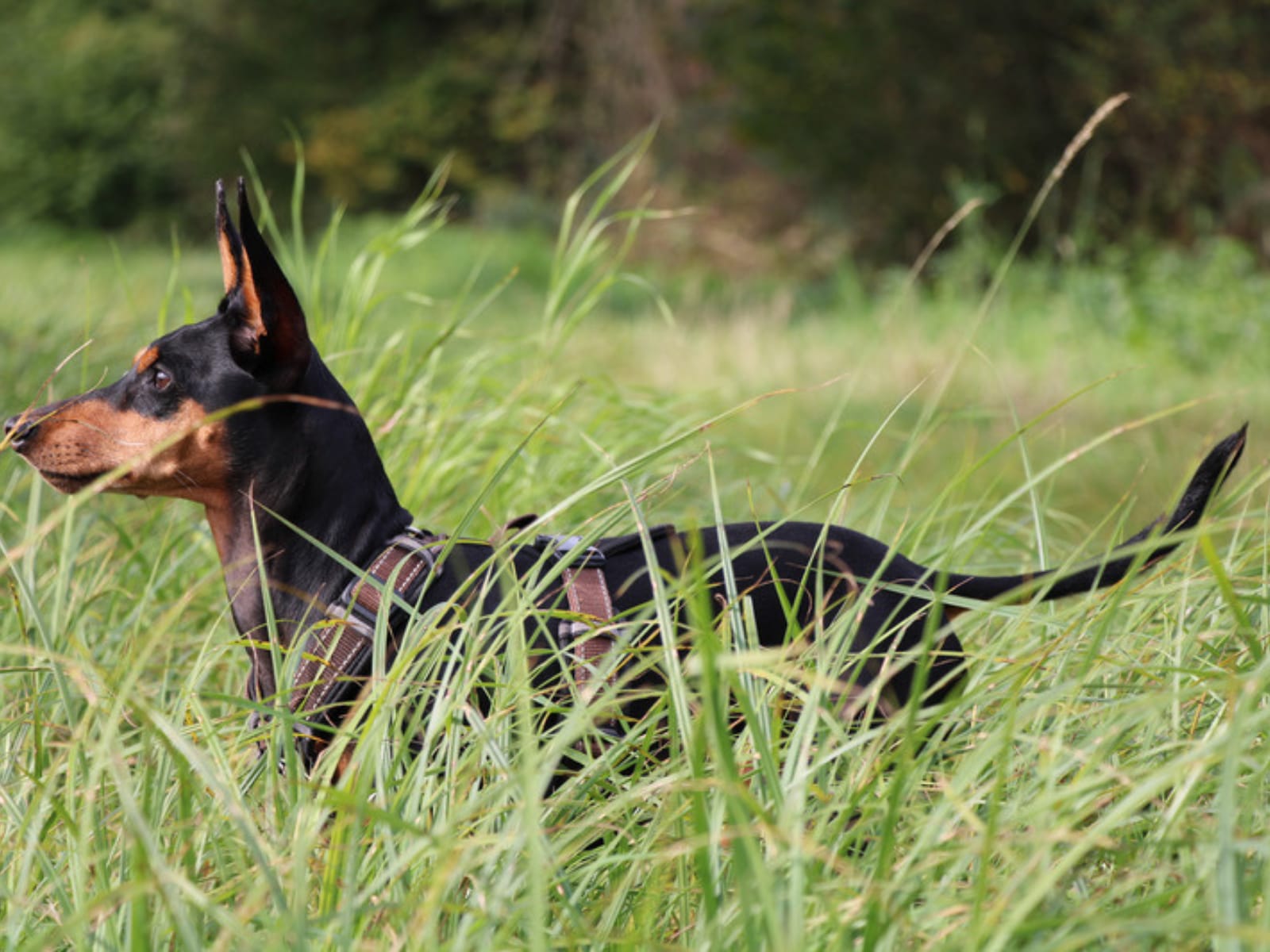
German Pinscher with natural ears in tall grass

Breed facts

FCI
no. 184 · group 2, pinschers and schnauzers
Origin
Germany
Height at withers
45–50 cm
Weight
14–20 kg
Exercise
up to 1 hour a day (according to the Royal Kennel Club)
Lifespan
over 10 years
Coat
short, sheds

The GoPuppy profile

These are breed averages and our own assessment. Your own dog’s age, fitness and training matter more.

  1. WalkingLong walksThe Royal Kennel Club gives up to an hour of exercise a day; according to the standard he has plenty of endurance.
  2. Dog sportSport with a build-upAgility, obedience and scent work suit a clever, energetic dog.Suitsagilityobediencescent work
  3. Terraces and cafésTerrace after trainingThe standard calls him lively, self-assured and even-tempered, and watchful.
  4. Travel and staysTravels with some planningMedium-sized and easy to take along.
  5. CityBetter with a gardenThe Royal Kennel Club suggests a small house with a small to medium garden, in town or country.

Character

According to the FCI standard, his lively, spirited, self-assured and even-tempered nature, combined with intelligence and endurance, makes the German Pinscher an agreeable family, watch and companion dog.

Origin

The smooth-haired Pinscher is a very old breed, already mentioned in the German stud book in 1880. He shares his ancestors with the Schnauzer, which was also called the rough-coated Pinscher. According to the Royal Kennel Club he is the ancestor of the Dobermann and the Miniature Pinscher, yet far less popular than both. He was used to kill rats and other vermin. The FCI places him in Group 2, section 1, pinscher and schnauzer type.

Health

The Royal Kennel Club puts genetic diversity first when choosing the parents.

Size

Dogs and bitches measure 45 to 50 cm and weigh 14 to 20 kg.
Health: what a good breeder tests for

  • Prioritising genetic diversity when choosing the parents

Ask for the parents’ results when you visit a litter. This is not medical advice; your vet knows your dog.

Breeders of this breed on GoPuppy

No breeder of this breed on GoPuppy yet.

GoPuppy does not check breeders’ health tests. A listing here is not a seal of approval.

Read also