FCI 168 · Great Britain

Dandie Dinmont Terrier

A long, low terrier that takes its name from a novel by Walter Scott.

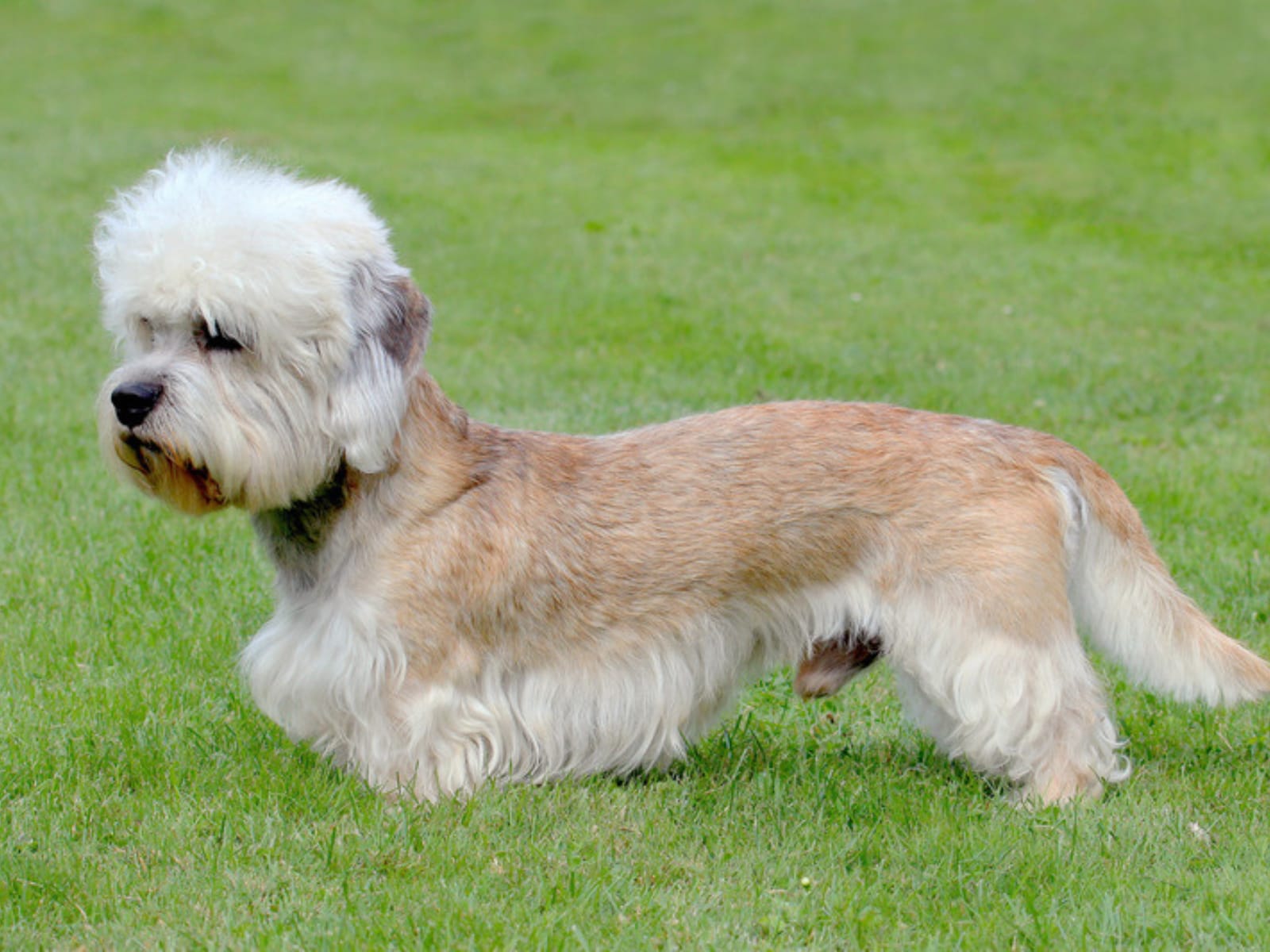
Dandie Dinmont Terrier standing on a lawn

Breed facts

FCI
no. 168 · group 3, small terriers
Origin
Great Britain
Height at withers
20–28 cm
Size
According to the standard, the lower weights are preferred.
Weight
8–11 kg
Exercise
up to 1 hour a day (according to the Royal Kennel Club)
Lifespan
over 12 years
Coat
medium length, sheds little

The GoPuppy profile

These are breed averages and our own assessment. Your own dog’s age, fitness and training matter more.

  1. WalkingOne to two hoursThe Royal Kennel Club gives up to an hour of exercise a day.
  2. Dog sportCalm gamesScentwork and hoopers suit a determined, low-built terrier.Suitsscent workhoopers
  3. Terraces and cafésTerrace with some practiceThe standard calls him sensitive, affectionate and dignified.
  4. Travel and staysTravels easilySmall, easy to take along.
  5. CityTown or villageThe RKC suggests a small house with a small to medium garden, in town or country.

Temperament

According to the FCI standard the Dandie Dinmont is a game, workmanlike terrier. He is independent, highly intelligent, determined and persistent, but also sensitive, affectionate and dignified.

Origin

According to the Royal Kennel Club the breed developed in the Border counties and Scotland. Its name comes from Sir Walter Scott’s novel Guy Mannering. Scott based the character Dandie Dinmont on a neighbouring farmer, James Davidson, whose terriers were called Pepper and Mustard. Local readers gave Davidson the nickname, and his dogs and all similar terriers took it on. Pepper (blue-grey) and Mustard (sandy) are still the names of the breed’s two colours. Since 2015 the breed may wear the Sir Walter Scott tartan. The RKC lists it as a vulnerable native breed. It appears in the ancestry of the Sealyham Terrier and the Australian Terrier. The FCI places him in Group 3, Section 2, small terriers.

Health

The Royal Kennel Club prioritises genetic diversity and lists no further tests for this breed.

Size

Height is 20 to 28 cm. Weight is 8 to 11 kg, with the lower weights preferred.
Health: what a good breeder tests for

  • Prioritising genetic diversity when choosing the parents

Ask for the parents’ results when you visit a litter. This is not medical advice; your vet knows your dog.

Breeders of this breed on GoPuppy

No breeder of this breed on GoPuppy yet.

GoPuppy does not check breeders’ health tests. A listing here is not a seal of approval.

Read also