Character
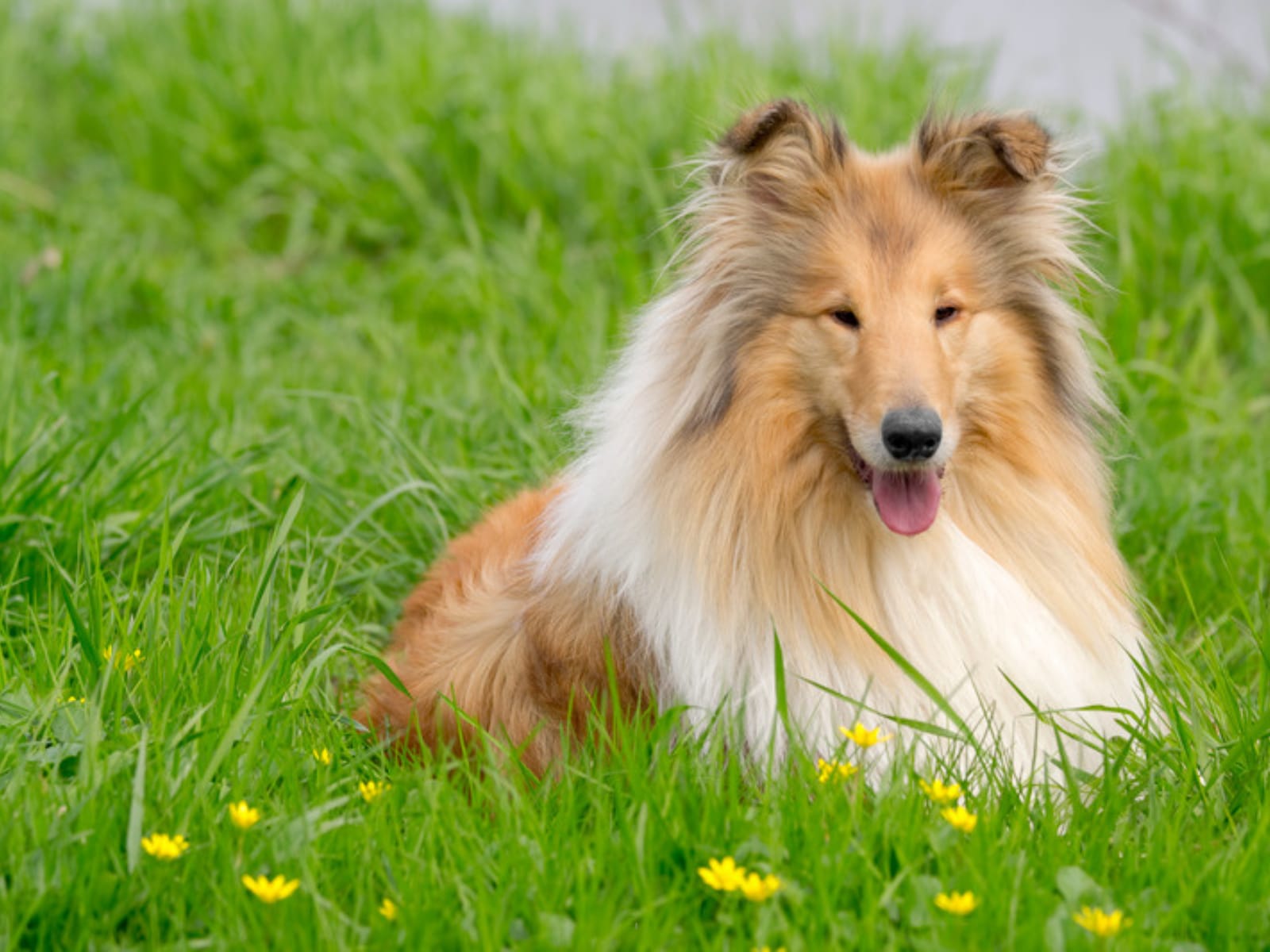
According to the FCI standard, the Collie has a friendly disposition with no trace of nervousness or aggressiveness. The standard calls the Rough Collie a great companion dog, friendly, happy and active, good with children and other dogs.
Two varieties
The FCI describes the Collie in two standards: Rough (no. 156) and Smooth (no. 296). According to the standard they are the same dog apart from coat length. They derive very recently from the same stock and still share lines today. The Royal Kennel Club notes that Rough and Smooth could be interbred until 1994, so both could be born in the same litter. The Rough has a full coat that needs daily care, the Smooth a short coat groomed once a week.
Origin
The Collie is thought to descend from dogs brought to Scotland by the Romans that then mated with native types. The Rough Collie is a refined version of the Scottish shepherd’s working collie, selected for over a hundred years. According to the standard, many can still work if given the chance: for all his beauty, the Collie is a worker. According to the RKC, Queen Victoria brought Collies from Balmoral to Windsor. The FCI places him in Group 1, section 1, sheepdogs. Related breeds are the Border Collie and the Shetland Sheepdog.
Health
For both varieties the Royal Kennel Club lists eye and hip testing, plus DNA tests for Collie eye anomaly (CEA/CH), degenerative myelopathy (DM), MDR1 (multi-drug sensitivity) and PRA (rcd2). For the Rough it asks for eye testing of the puppies too.
Size
Males measure 56 to 61 cm, females 51 to 56 cm. For the Smooth, the standard gives 20.5 to 29.5 kg for males and 18 to 25 kg for females.