FCI 113 · France

Briard

The sheepdog of the Brie region. The name "chien de Brie" first appears in 1809.

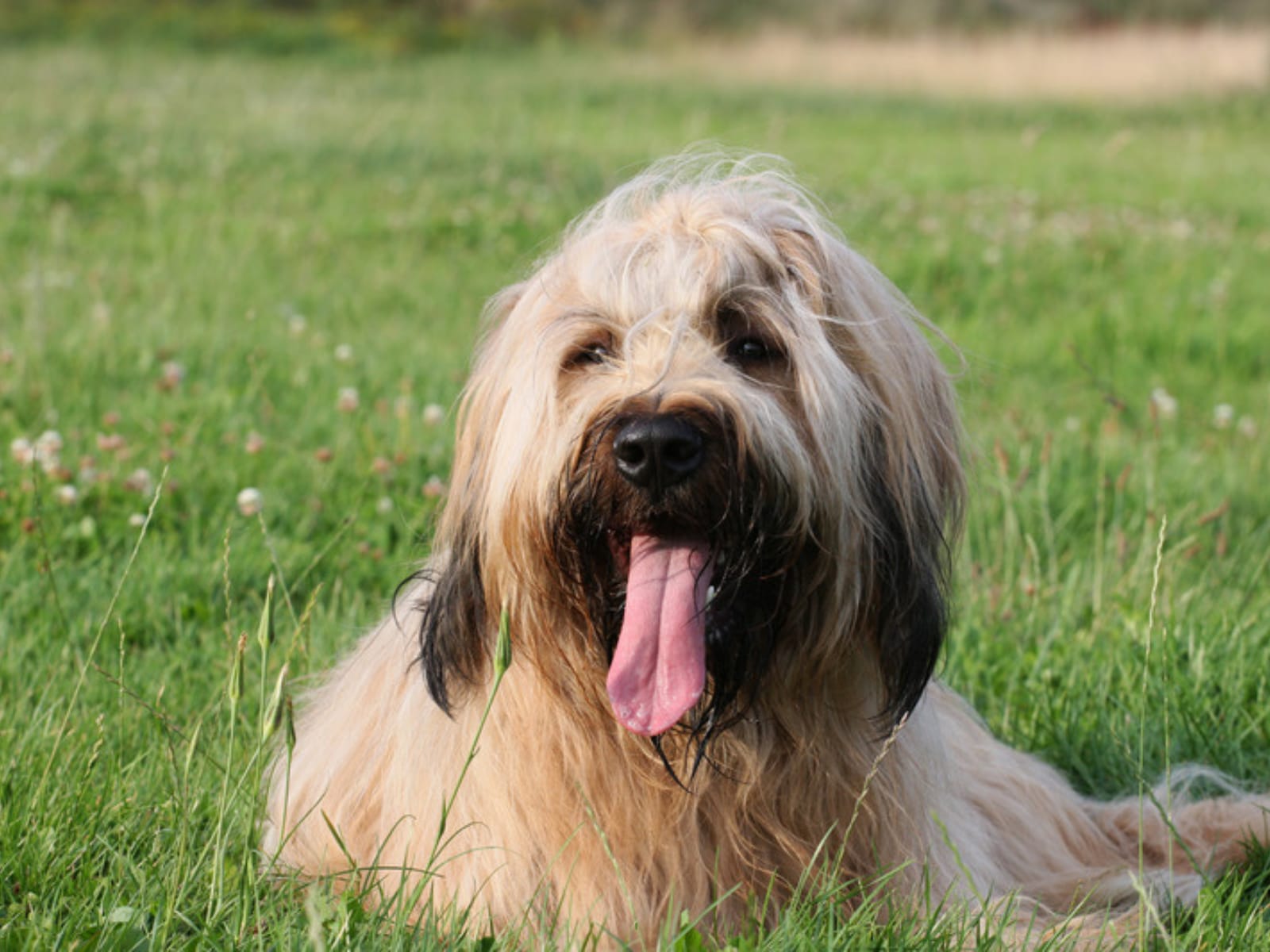
Fawn Briard lying in the grass

Breed facts

FCI
no. 113 · group 1, sheepdogs
Origin
France
Height at withers
male 62–68 cm · female 56–64 cm
Exercise
more than 2 hours a day (according to the Royal Kennel Club)
Lifespan
over 10 years
Coat
long, sheds

The GoPuppy profile

These are breed averages and our own assessment. Your own dog’s age, fitness and training matter more.

  1. WalkingFull-day hikesThe Royal Kennel Club gives more than two hours of exercise a day. Long walks suit him.
  2. Dog sportSport with a build-upA sheep and guard dog with a working trial. Herding, obedience and mantrailing suit him.Suitsherdingobediencemantrailing
  3. Terraces and cafésTerrace after trainingThe standard calls him balanced, neither aggressive nor timid, steady and fearless.
  4. Travel and staysRules or heat when travellingLarge, with a long coat. He needs a roomy car or crate.
  5. CityNeeds a big gardenThe Royal Kennel Club suggests a large house with a large garden, in town or country.

Character

According to the FCI standard, the Briard has a balanced temperament, neither aggressive nor timid. He should be steady and fearless.

Origin

For a long time he was known as the French lowlands sheepdog. In 1809 the name “chien de Brie” appeared for the first time, in Abbé Rozier’s complete course in agriculture. He was bred and selected for driving and guarding herds. The French army used him in both World Wars, among other things as a sentry and to search for the wounded. According to the Royal Kennel Club, he shares some ancestry with the short-coated Beauceron, was shown at the very first French dog show in 1863 and was officially recognised in 1897. The FCI places him in Group 1, section 1, sheepdogs, with a working trial.

Coat and health

The long coat needs daily care, according to the RKC. The RKC puts genetic diversity first and asks for a DNA test for congenital stationary night blindness (CSNB) and hip testing.

Size

Males measure 62 to 68 cm, females 56 to 64 cm.
Health: what a good breeder tests for

  • Prioritising genetic diversity when choosing the parents
  • DNA test for congenital stationary night blindness (CSNB)
  • Hips (X-ray, official result)

Ask for the parents’ results when you visit a litter. This is not medical advice; your vet knows your dog.

Breeders of this breed on GoPuppy

No breeder of this breed on GoPuppy yet.

GoPuppy does not check breeders’ health tests. A listing here is not a seal of approval.

Read also