FCI 109 · Great Britain

Clumber Spaniel

The heaviest of the spaniels, named after Clumber Park, home of the Dukes of Newcastle.

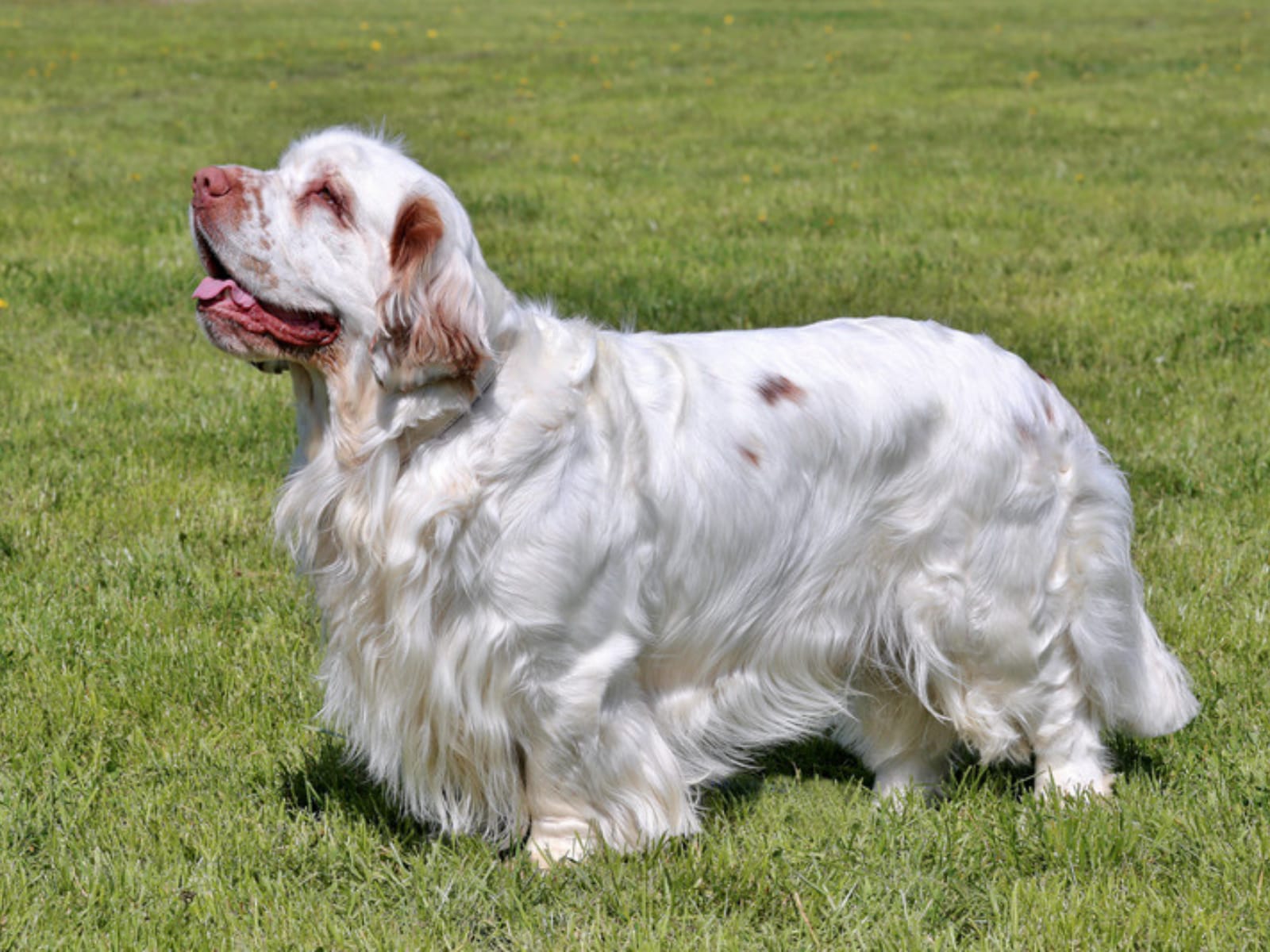
White and orange Clumber Spaniel standing on a lawn

Breed facts

FCI
no. 109 · group 8, flushing dogs
Origin
Great Britain
Size
The standard gives only an ideal weight, no height.
Weight
male 29.5–34 kg · female 25–29.5 kg
Exercise
up to 1 hour a day (according to the Royal Kennel Club)
Lifespan
over 10 years
Coat
medium length, sheds

The GoPuppy profile

These are breed averages and our own assessment. Your own dog’s age, fitness and training matter more.

  1. WalkingOne to two hoursThe Royal Kennel Club gives up to an hour of exercise a day. He works at a steadier pace than other spaniels.
  2. Dog sportScent work and one sportA spaniel with a working trial and an excellent nose. Scentwork, dummy training and mantrailing suit him.Suitsscent workdummy trainingmantrailing
  3. Terraces and cafésTerrace after trainingThe standard calls him steady, reliable, kind and dignified, more aloof than other spaniels.
  4. Travel and staysTravel takes preparationHeavy and low to the ground. A roomy car with a low loading sill helps.
  5. CityNeeds a big gardenThe RKC suggests a large house with a small to medium garden, in the country.

Temperament

The FCI standard describes the Clumber Spaniel as stoical, great-hearted and highly intelligent, with a determined attitude. He is a silent worker with an excellent nose, steady, reliable, kind and dignified, and more aloof than other spaniels.

Origin

According to the standard the first Clumbers came from France more than two hundred years ago. The Duke of Newcastle brought them to Great Britain and bred them at his family home, Clumber Park in Nottinghamshire. According to the Royal Kennel Club the 2nd Duke was given dogs of this type by the Duke of Noailles around 1770. A painting from 1788 shows three dogs of unmistakable Clumber type. King George V kept a large team of Clumbers on the Sandringham Estate. He was used to flush game from heavy cover. The FCI places him in Group 8, Section 2, flushing dogs, with a working trial.

Health

The Royal Kennel Club prioritises genetic diversity and lists elbow, eye and hip testing. Since December 2025 a DNA test for exercise induced collapse (EIC) has been part of the recommended tests. According to the RKC the condition is common in the breed. The FCI standard asks breeders to make sure his weight does not weaken his hindquarters.

Size

The standard gives an ideal weight: 29.5 to 34 kg for dogs, 25 to 29.5 kg for bitches.

Health: what a good breeder tests for

  • Prioritising genetic diversity when choosing the parents
  • Elbows (X-ray, official result)
  • Eye testing
  • Hips (X-ray, official result)
  • DNA test for exercise induced collapse (EIC)

Ask for the parents’ results when you visit a litter. This is not medical advice; your vet knows your dog.

Breeders of this breed on GoPuppy

No breeder of this breed on GoPuppy yet.

GoPuppy does not check breeders’ health tests. A listing here is not a seal of approval.

Read also