Puppy at home: the first weeks, training and socialisation
The first weeks with your puppy lay the foundation for the rest of its life. Here's how to help it settle in calmly.
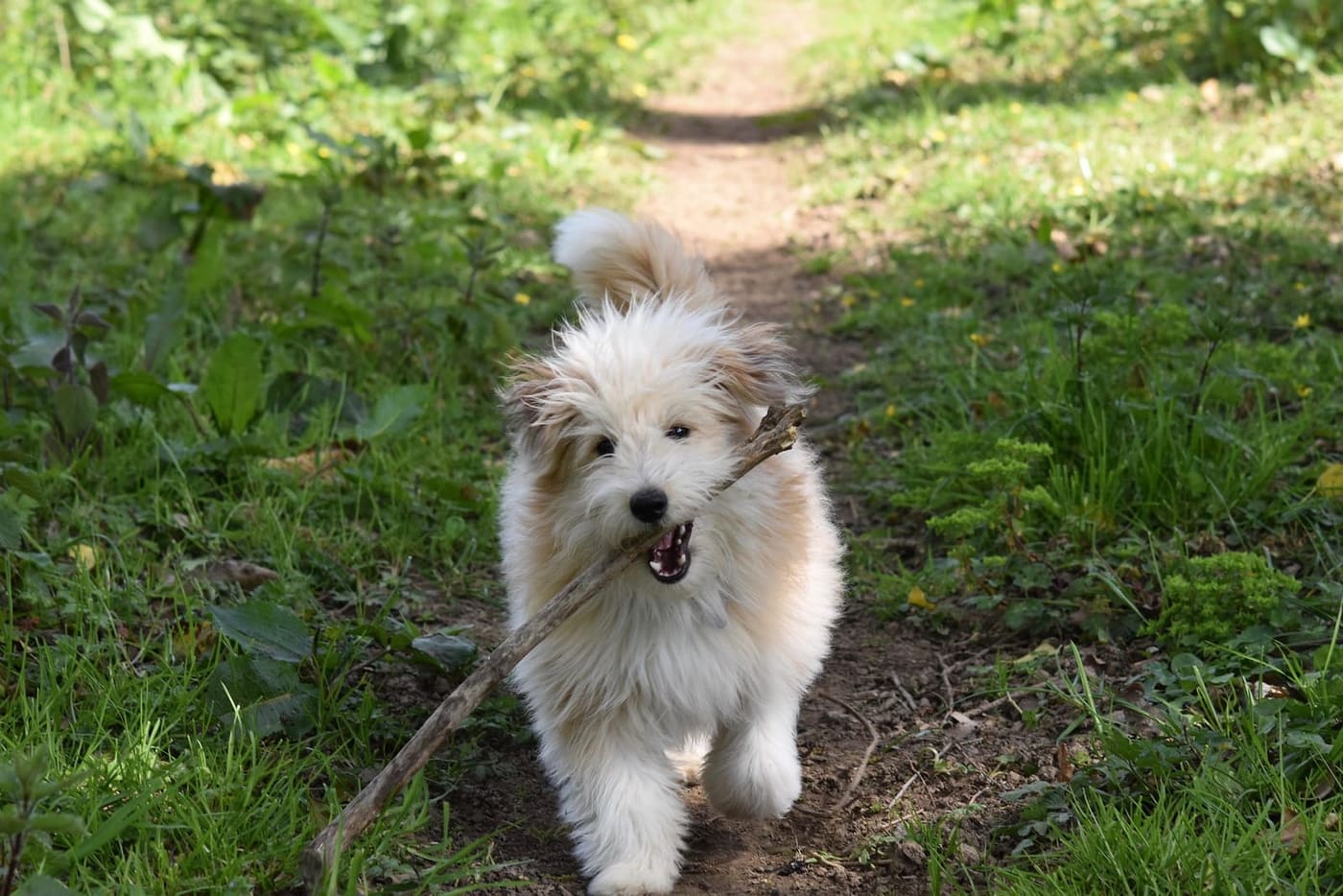
A puppy at home is fantastic, and quite the adjustment. The first weeks help shape how confident and sociable your dog becomes later on. No stress: with calm, structure and plenty of positive experiences, you’ll get a long way.
Every puppy is different. For health, vaccinations and deworming, follow your vet’s advice.
The first days: calm above all
Your puppy has just left its mother and littermates, that’s a big deal. Keep things small and calm:
- Set up a fixed resting spot (bed or crate) where it’s left in peace.
- Limit the number of impressions and visitors in the first few days. Puppies sleep a lot. Let them.
- Keep a fixed rhythm of eating, sleeping, playing and going outside. Predictability brings calm.
House-training: a matter of timing
Puppies need to relieve themselves often, and at predictable moments: after sleeping, after eating, after playing. Take your puppy straight outside at those times and reward it enthusiastically as soon as it goes there. An accident indoors? Clean it up calmly without punishment; punishment mostly just makes a puppy insecure. Being consistent and patient works fastest.
The socialisation window: precious and short
Young puppies go through a sensitive period in which they relatively easily learn to accept new things as “normal.” Those early weeks are golden: during this time (at your puppy’s own pace and always positively) introduce it to a wide range of experiences:
- different people, including children (men wearing caps, people with umbrellas…)
- sounds (traffic, vacuum cleaner, doorbell)
- surfaces (grass, gravel, tiles, gratings)
- calm, vaccinated and friendly other dogs (already have a dog at home? see adding a second dog)
- everyday things like the car, brushing, and the vet
The key is quality, not overstimulation: short, positive experiences beat overwhelming your puppy. Discuss with your vet when your puppy, given its vaccination status, can safely go out and about. If your puppy still misses out on a good start, you can still make adjustments later. See our piece on helping an insecure dog.
Basic behaviour: start small, reward a lot
You don’t need to teach tricks yet. Start with the basics in short, fun sessions: responding to its name, coming to you when called, and calmly learning to be alone (built up in small steps, so your puppy doesn’t panic). Reward what goes well; ignore or redirect what isn’t allowed. Building things up positively produces a dog that’s happy to work with you.
A puppy course or dog training school helps
A good dog training school gives your puppy safe socialisation, and gives you the guidance to do the right things from the start. Choose one that works with positive, dog-friendly methods. See choosing a dog training school: group, private or puppy for the difference between a puppy course, group lessons and private lessons. On GoPuppy you’ll find dog training schools and other services near you, and know a good school or daycare that isn’t listed yet? Add it.
Enjoy this time: it’s short, chaotic and unforgettable.
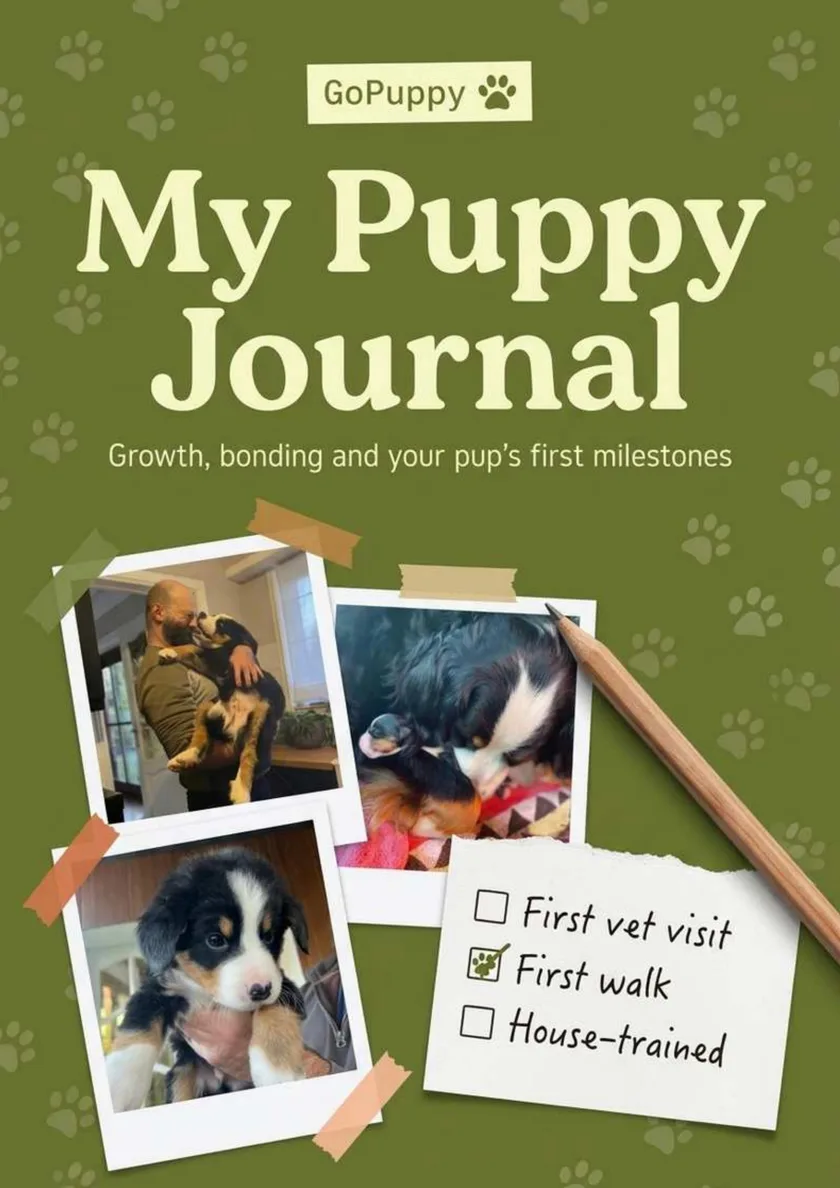
Want to keep track of those first months? Our own book, My puppy journal, follows your puppy step by step through their first year, with guidance for every stage and room for your photos and milestones.