Character
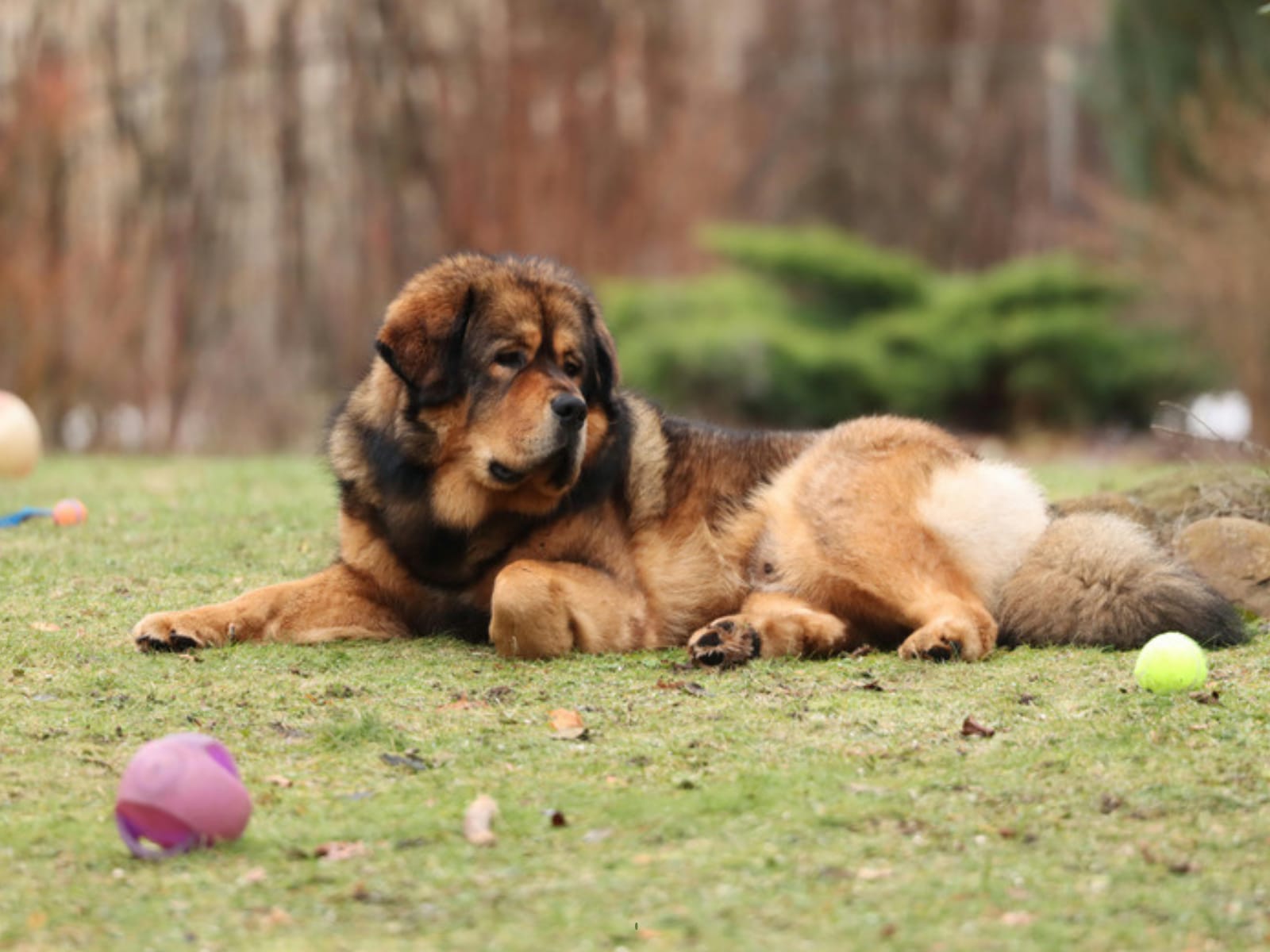
The FCI standard describes the Tibetan Mastiff as independent and protective, a dog that commands respect and is most loyal to his family and territory. An experienced owner and good socialisation matter a great deal with this breed.
Origin
The Tibetan Mastiff (Do Khyi) is an ancient working breed of the nomad herders of the Himalaya and a traditional guardian of the Tibetan monasteries. From Aristotle to Marco Polo, who went to Asia in 1271, historical accounts praise his strength and presence. Even his bark has been described as a treasured feature. One of the first Tibetan Mastiffs to reach the West was a male sent to Queen Victoria by Lord Hardinge in 1847. In 1898 one of the first recorded litters was born at Berlin Zoo. The FCI places him in Group 2, section 2.2.
Rules when travelling
In our research on breed rules in Europe we found no country with specific rules for a pedigree Tibetan Mastiff. France and Luxembourg do have rules for the ‘mastiff’ and dogs resembling it; if in doubt, take the pedigree papers along.
Health and size
The Royal Kennel Club puts genetic diversity first and recommends hip and elbow testing. Males measure at least 66 cm, females at least 61 cm.