FCI 97 · Germany

Pomeranian

The smallest of the German spitz breeds, about 21 cm tall. In countries where German is not spoken, the Toy Spitz is known as the Pomeranian.

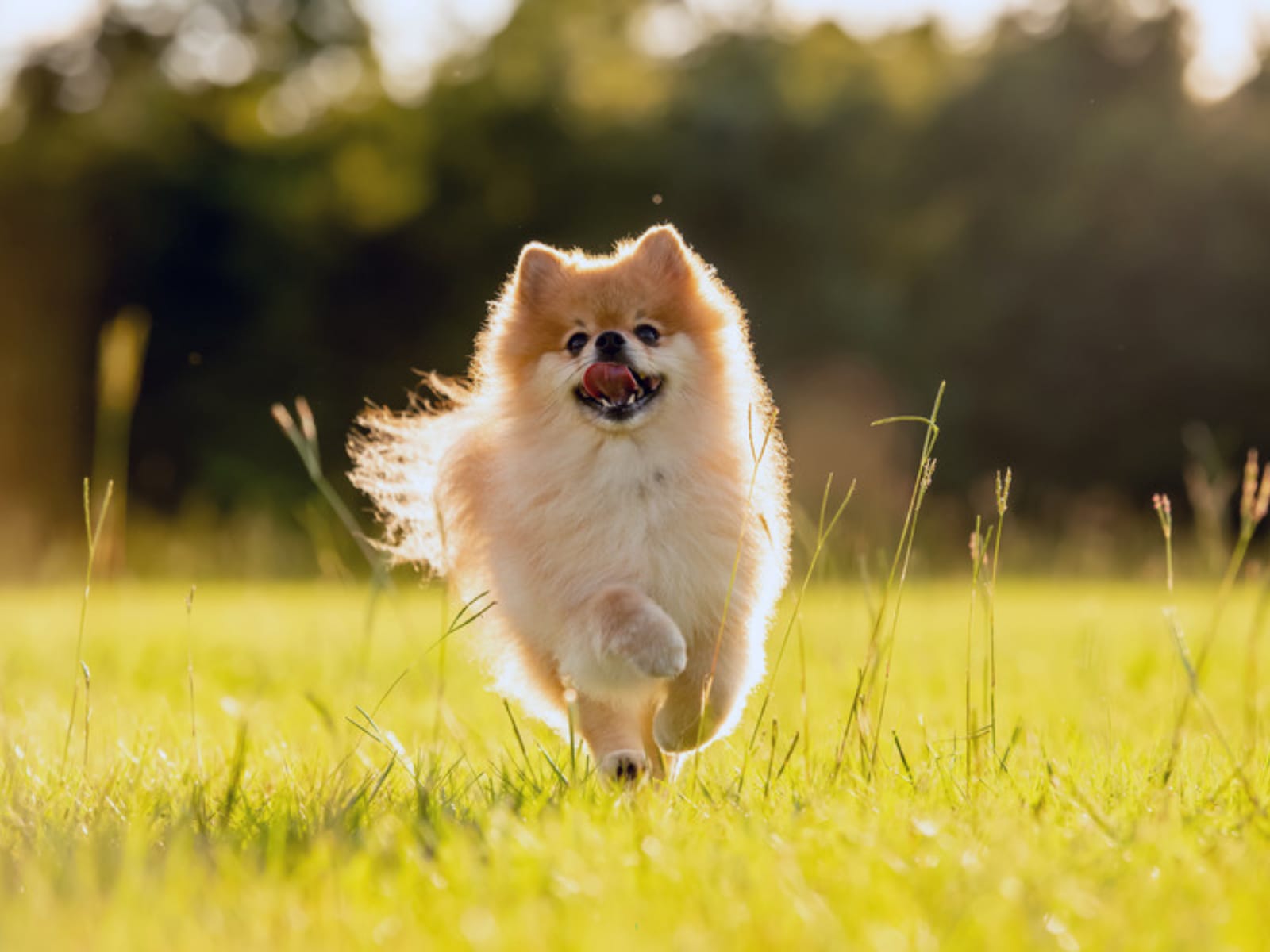
Pomeranian running through the grass

Breed facts

FCI
no. 97 · group 5, European spitz
Origin
Germany
Height at withers
18–24 cm
Size
The standard asks for 21 cm, give or take 3 cm, with weight in proportion to size.
Exercise
up to 30 minutes a day (according to the Royal Kennel Club)
Lifespan
over 12 years
Coat
medium length, sheds

The GoPuppy profile

These are breed averages and our own assessment. Your own dog’s age, fitness and training matter more.

  1. WalkingShort loopsThe Royal Kennel Club gives up to thirty minutes of exercise a day. Short rounds suit him best, although the standard calls him robust and indifferent to weather.
  2. Dog sportCalm gamesHoopers and scent work at his size. The standard calls him 'very teachable and easy to train'.Suitshoopersscent work
  3. Terraces and cafésTerrace with some practiceSmall, cheerful and, according to the standard, neither timid nor aggressive. He sees and hears everything: he is also a little watchdog.
  4. Travel and staysTravels easilySmall and light, easy to carry in a bag or crate, and in the cabin if the airline accepts dogs.
  5. CityCity dogThe standard calls him an ideal watchdog 'for house and apartment', and the Royal Kennel Club says a flat is enough.

Character

The FCI standard describes the Toy Spitz as always attentive, lively and extraordinarily attached to his owner. He is very teachable and easy to train. His companionable, cheerful character makes him, according to the standard, an ideal family dog and watchdog for house and apartment. He is neither timid nor aggressive, and the standard names indifference to weather, robustness and longevity as his most outstanding attributes.

Origin

According to the standard, German Spitz dogs descend from the Stone Age ‘peat dog’ and the later lake-dwelling spitz; it is the oldest dog breed in Central Europe, and many other breeds were developed from it. The FCI standard covers five sizes in one text, from the Wolfsspitz or Keeshond to the Toy Spitz or Pomeranian. The FCI places him in Group 5, section 4, European spitz.

Coat and ears

The coat stands off the body thanks to a plentiful undercoat, with a striking mane-like collar. The small, triangular ears are always carried upright. The Royal Kennel Club recommends eye testing for breeders.

Size

The standard asks for a height of 21 cm, give or take 3 cm, with weight in proportion to size.
Health: what a good breeder tests for

  • Eye testing

Ask for the parents’ results when you visit a litter. This is not medical advice; your vet knows your dog.

Breeders of this breed on GoPuppy

No breeder of this breed on GoPuppy yet.

GoPuppy does not check breeders’ health tests. A listing here is not a seal of approval.

Read also