FCI 72 · Great Britain

Norwich Terrier

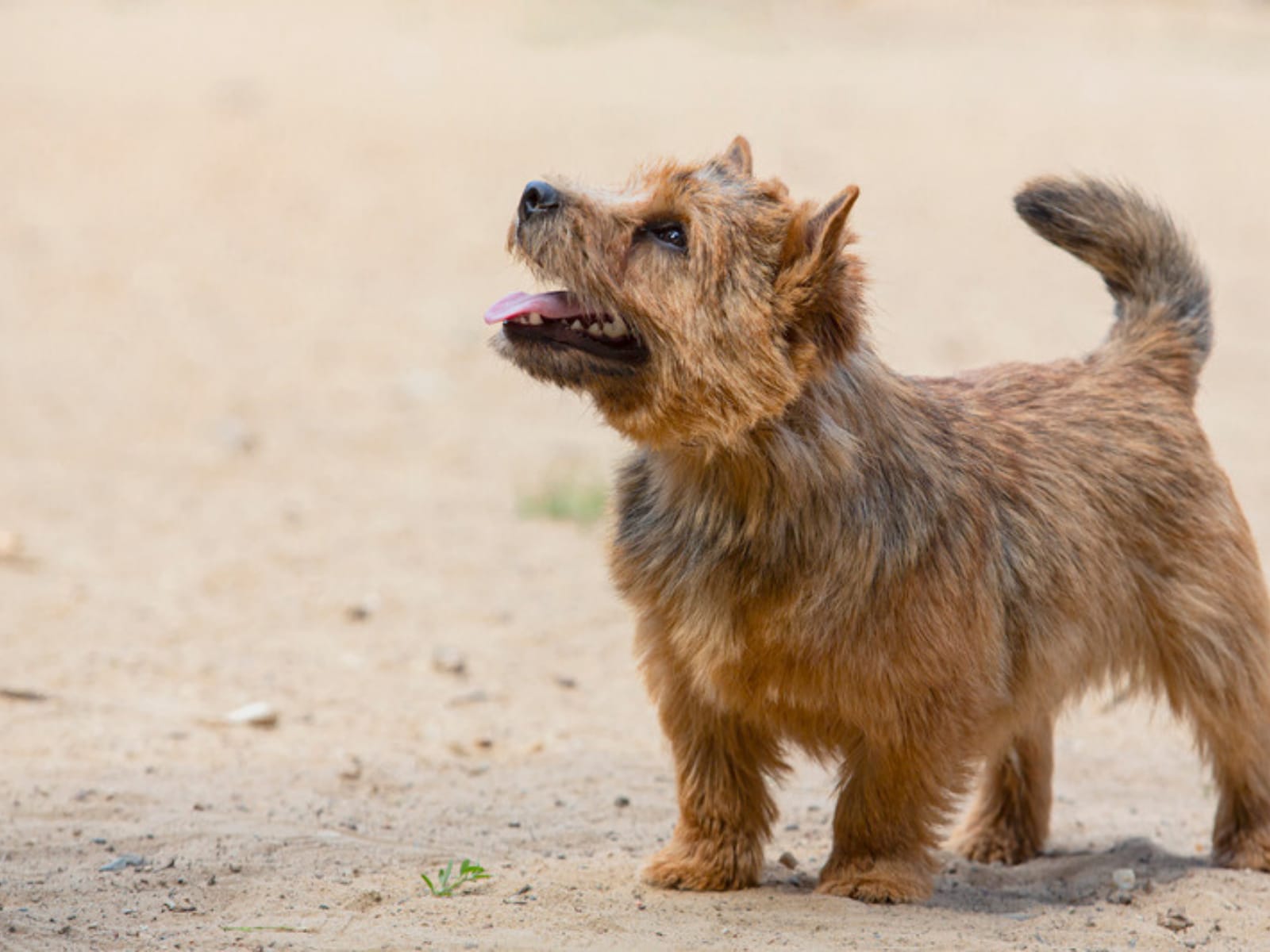
A small, active terrier with prick ears, named after the city of Norwich.

Norwich Terrier with prick ears on a sandy path

Breed facts

FCI
no. 72 · group 3, small terriers
Origin
Great Britain
Height at withers
25 cm
Size
The standard gives this as the ideal height.
Exercise
up to 1 hour a day (according to the Royal Kennel Club)
Lifespan
over 10 years
Coat
medium length, sheds

The GoPuppy profile

These are breed averages and our own assessment. Your own dog’s age, fitness and training matter more.

  1. WalkingOne to two hoursThe Royal Kennel Club gives up to an hour of exercise a day. The standard calls him tremendously active.
  2. Dog sportScent work and one sportScentwork, hoopers and agility suit a small, active terrier.Suitsscent workhoopersagility
  3. Terraces and cafésTerrace with some practiceThe standard calls him lovable, not quarrelsome, gay and fearless.
  4. Travel and staysTravels easilySmall and sturdy, easy to take along.
  5. CityTown or villageThe RKC says a flat is enough, in town or country.

Temperament

According to the FCI standard the Norwich Terrier has a lovable disposition and is not quarrelsome. He is tremendously active, hardy, gay and fearless.

How it differs from the Norfolk Terrier

The Norwich and the Norfolk Terrier look very much alike. The Norwich has erect ears with pointed tips, set well apart on top of the skull. The Norfolk has drop ears. According to the Royal Kennel Club both were shown as one breed until 1964, with two permitted ear types. The prick-eared type was the more popular one, and otherwise the two standards are almost identical.

Origin

Both breeds take their names from the county of Norfolk and the city of Norwich. In the early 19th century this was simply a farm dog from East Anglia. Glen of Imaal Terriers, red Cairn Terriers and Dandie Dinmonts are among the breeds behind it. He worked on fox, badger and rats. The FCI places him in Group 3, Section 2, small-sized terriers.

Health

The Royal Kennel Club prioritises genetic diversity and lists no further tests for this breed.

Size

The ideal height at the withers is 25 cm.

Health: what a good breeder tests for

  • Prioritising genetic diversity when choosing the parents

Ask for the parents’ results when you visit a litter. This is not medical advice; your vet knows your dog.

Breeders of this breed on GoPuppy

No breeder of this breed on GoPuppy yet.

GoPuppy does not check breeders’ health tests. A listing here is not a seal of approval.

Read also