Temperament
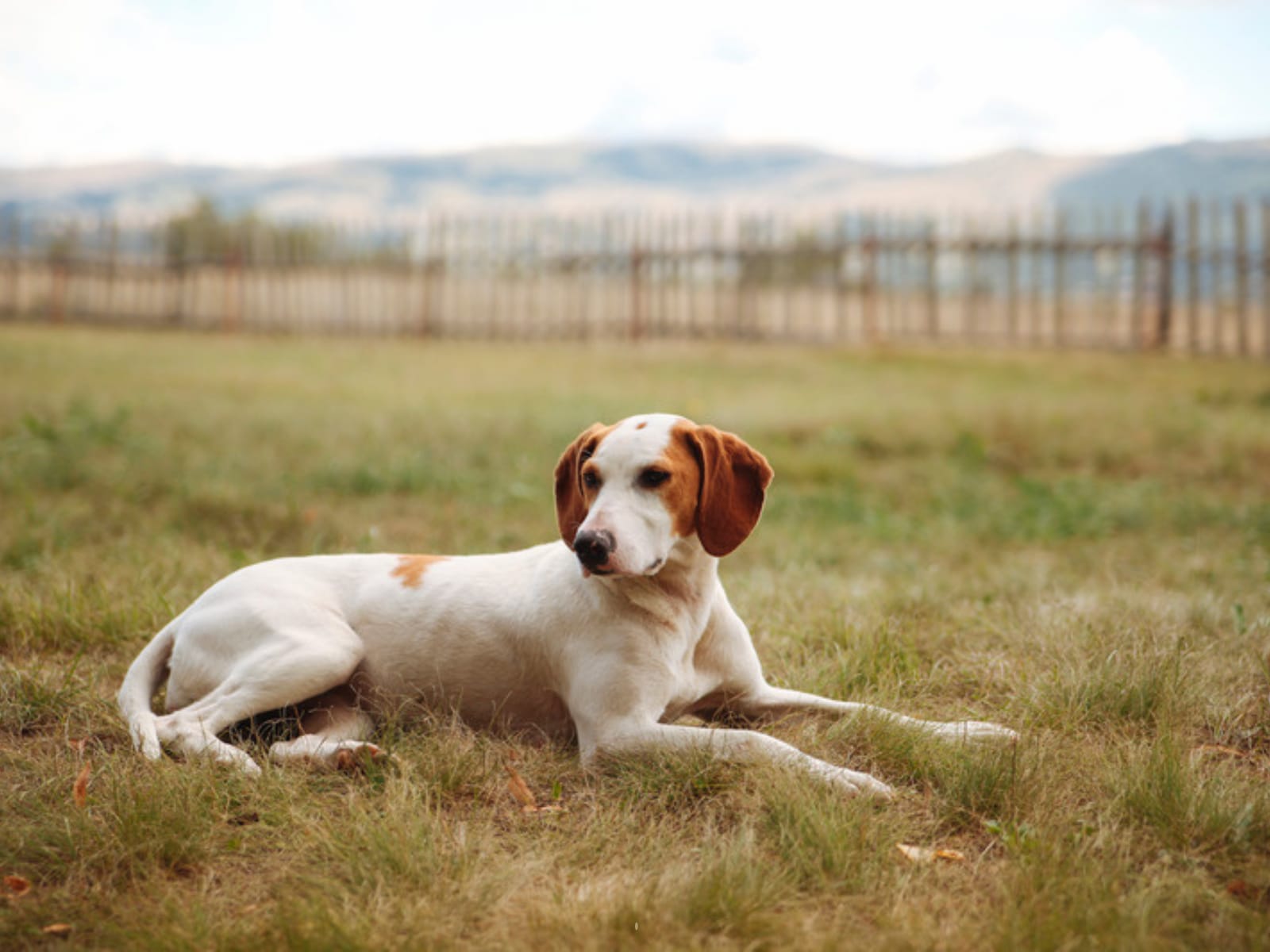
The FCI standard calls the Istrian Short-haired Hound lively, gentle, docile and obedient, neither nervous nor aggressive. He is devoted to his owner and wary of strangers. He is easy to train for hunting and well suited to rough, stony karst. His voice is strong and melodious. He hunts hare, fox and wild boar and can also work as a leashed tracking hound.
Origin
The breed descends from an old type, the “East Adriatic white hound with markings”. The earliest evidence is a capital with four dogs in the Franciscan monastery in Dubrovnik, from between 1327 and 1348. He also appears in a painting from 1474 in the cemetery chapel near the village of Beram in Istria, and in an altarpiece from 1476 in the church of St Francis in Zadar. In 1719 Bishop Petar Bakić of Đakovo wrote that the breed was already kept before the 14th century. The FCI published the first standard on 2 April 1955. The Istrian Wire-haired Hound comes from the same stock. According to its standard, the same Beram fresco also shows the Posavatz Hound. The FCI places him in group 6, section 1.2, medium-sized hounds, with working trial.
Health
We found no breed page at the Royal Kennel Club and no list of recommended health tests from the FCI. Ask the breeder about the tests done on both parents.
Size
Dogs measure 49 to 53 cm, bitches 47 to 51 cm. For dogs of excellent type the standard allows 3 cm either way. It gives no weight.