Temperament
The FCI standard describes the Hanoverian Scent Hound as calm and assured, sensitive with his handler and choosy with strangers. He can concentrate intensely on tracking work and is very loyal to the hunter he works with.
Origin
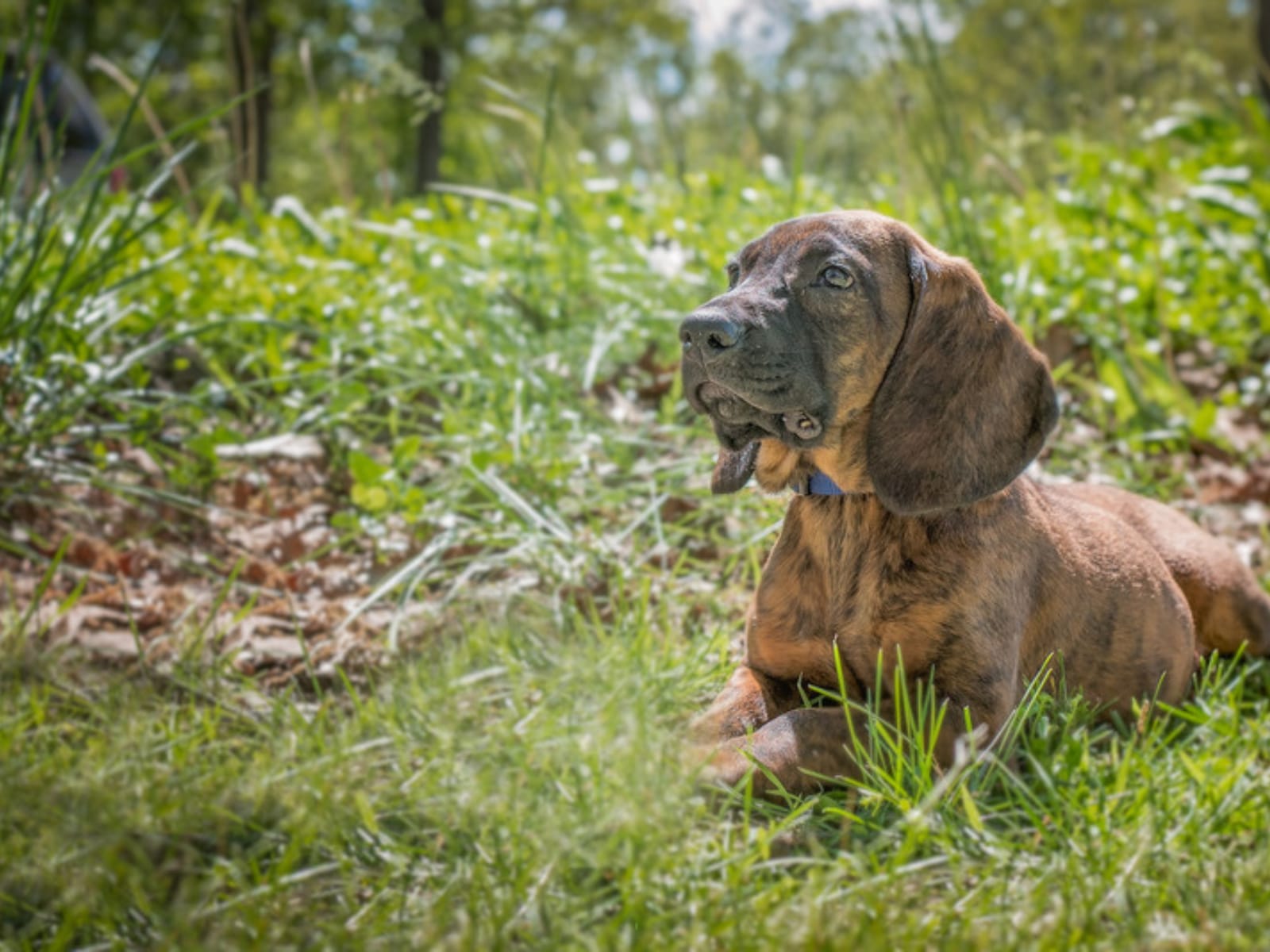
He has developed almost unchanged from the leash hound of the early Middle Ages, a Bracke that already played a part in the clan laws of the Germanic tribes around 500 AD. When firearms changed big-game hunting, dogs were needed to find wounded game, and the leash hound became a blood-tracking hound. The hunting establishment of the Kingdom of Hanover developed the breed further. Since 1894 the Verein Hirschmann has looked after it. Breeding is strictly for working ability, and the dogs work only in big-game hunting grounds, as specialists in tracking cloven-hoofed game. The coat is short and coarse, light to dark deer red, more or less brindled. The Bavarian Mountain Scent Hound came from crosses with this breed. A Hanoverian bitch was also the foundation of the Styrian Coarse-haired Hound. The FCI places him in group 6, section 2, leash (scent) hounds, with working trial.
Health
We found no breed page at the Royal Kennel Club and no list of recommended health tests from the FCI. Ask the breeder about the tests done on both parents.
Size
Dogs measure 50 to 55 cm and weigh 30 to 40 kg. Bitches measure 48 to 53 cm and weigh 25 to 35 kg.