FCI 2 · Great Britain

English Setter

An elegant pointing dog from Great Britain. The modern English Setter goes back to Edward Laverack’s breeding from 1825.

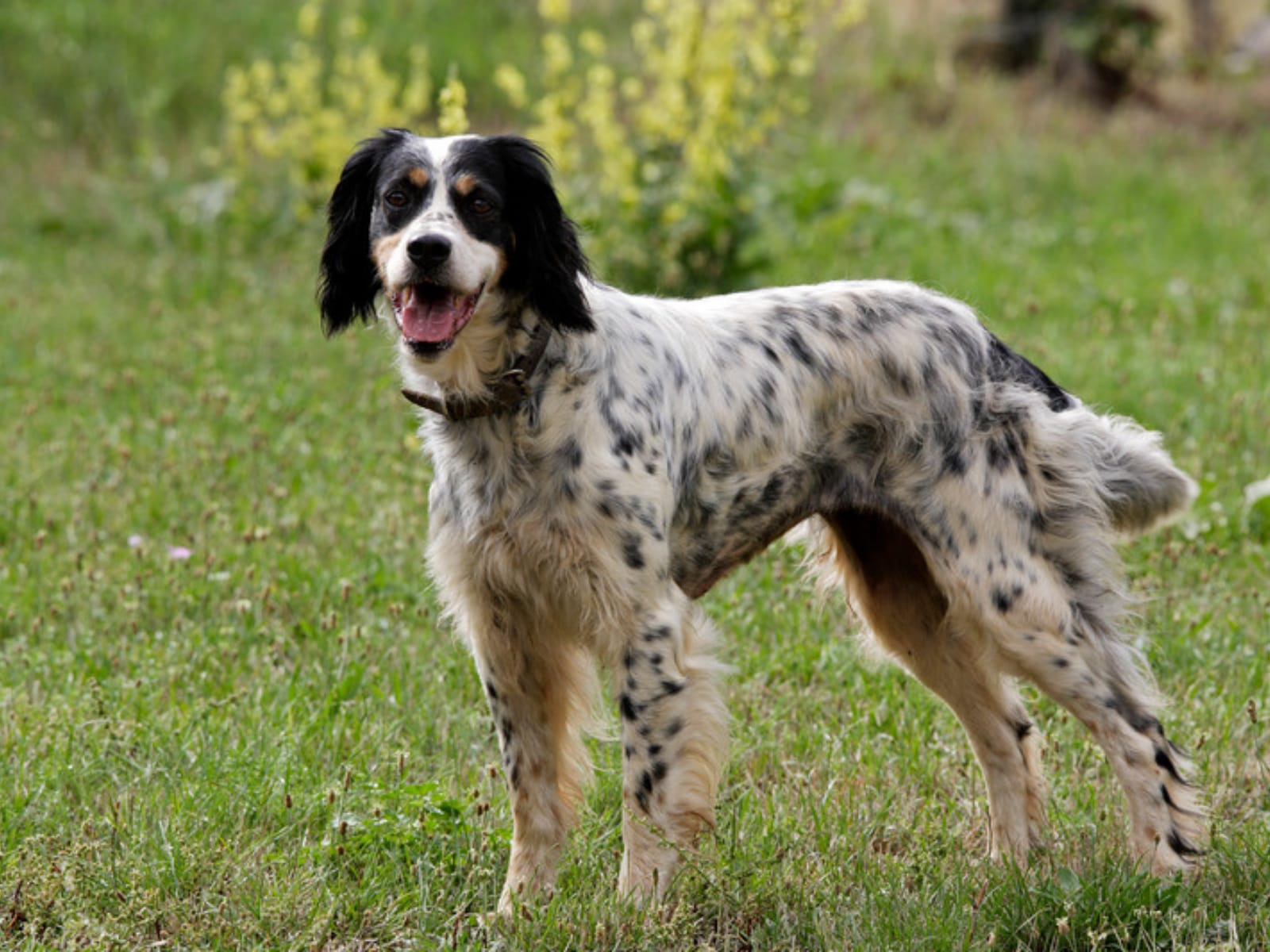
Flecked English Setter standing in a meadow

Breed facts

FCI
no. 2 · group 7, British and Irish pointers and setters
Origin
Great Britain
Height at withers
male 65–68 cm · female 61–65 cm
Exercise
more than 2 hours a day (according to the Royal Kennel Club)
Lifespan
over 10 years
Coat
medium length, sheds

The GoPuppy profile

These are breed averages and our own assessment. Your own dog’s age, fitness and training matter more.

  1. WalkingFull-day hikesThe Royal Kennel Club gives more than two hours of exercise a day. Long walks over open ground suit him.
  2. Dog sportSports partnerA pointing dog with a working trial. Canicross and scentwork keep him busy.Suitscanicrossscent workgundog work
  3. Terraces and cafésRather not a busy terraceThe standard calls him intensely friendly and good-natured.
  4. Travel and staysTravel takes preparationLarge. A roomy car or crate is needed.
  5. CityThe RKC suggests a large house with a large garden.

Temperament

According to the FCI standard the English Setter is very active, with a keen game sense. He is intensely friendly and good-natured.

Origin

According to the Royal Kennel Club, Edward Laverack laid the foundation of the modern English Setter. In 1825 he bought his first two setters, both blue belton, from an estate where they had been carefully bred for about 35 years. His contemporary Richard Purcell Llewellin used Gordon Setters, Red and White Setters and the now extinct Welsh Setter to widen the gene pool. The present breed comes from the dogs of these two breeders. Related breeds are the Gordon Setter and the Irish Setter. The FCI places him in Group 7, Section 2, British and Irish pointers and setters, with a working trial. Another British pointing dog is the English Pointer.

Health

The Royal Kennel Club prioritises genetic diversity and lists hip and elbow testing, and a hearing test for deafness (BAER), puppies included.

Size

Dogs measure 65 to 68 cm, bitches 61 to 65 cm.

Health: what a good breeder tests for

  • Prioritising genetic diversity when choosing the parents
  • Hips (X-ray, official result)
  • Elbows (X-ray, official result)
  • Hearing test for deafness (BAER), puppies included

Ask for the parents’ results when you visit a litter. This is not medical advice; your vet knows your dog.

Breeders of this breed on GoPuppy

No breeder of this breed on GoPuppy yet.

GoPuppy does not check breeders’ health tests. A listing here is not a seal of approval.

Read also