Character
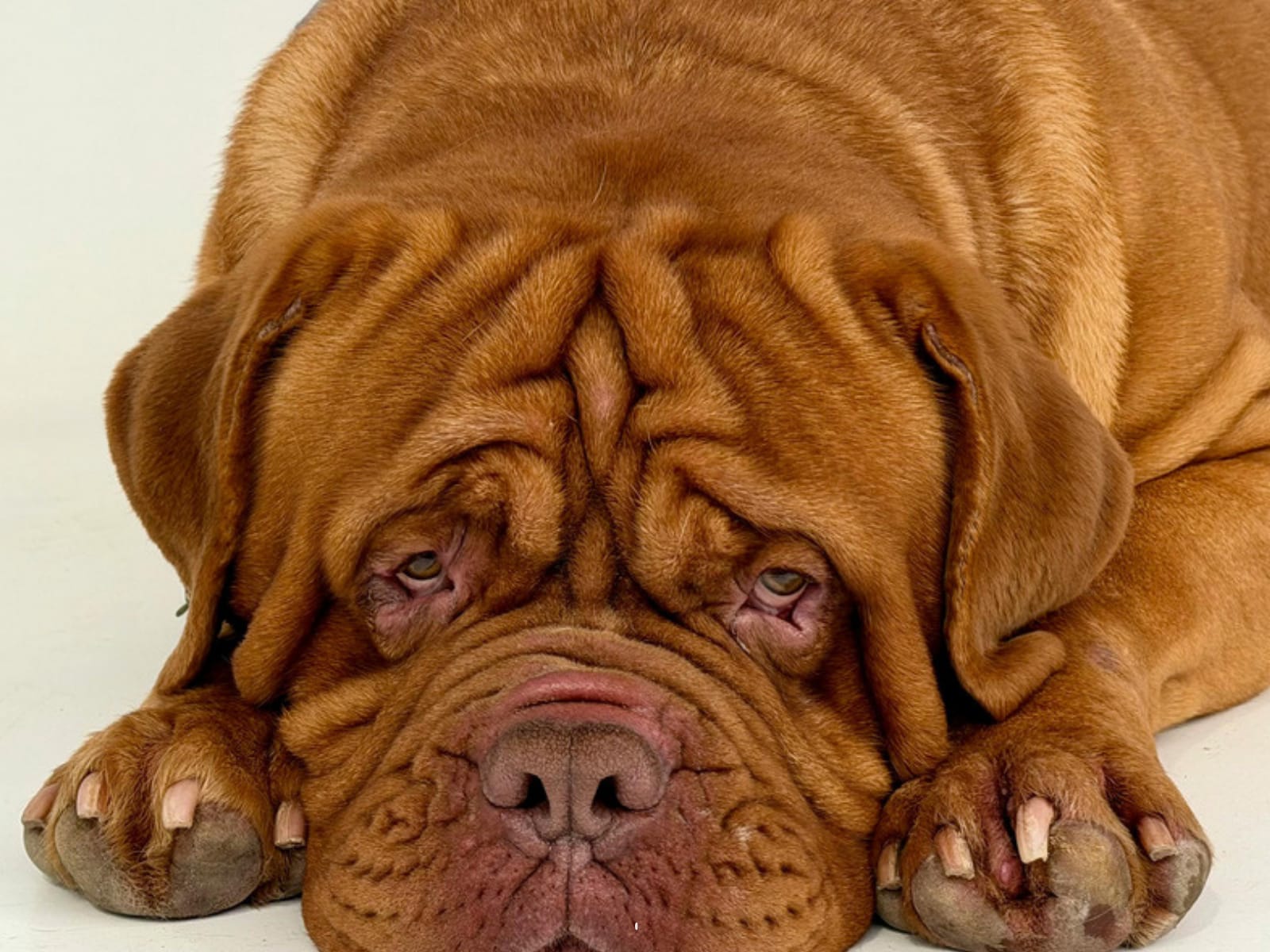
According to the FCI standard, the Dogue de Bordeaux, once a fighting dog, is gifted for guarding, which he does with vigilance and great courage but without aggressiveness. He is a good companion, very attached to his owner and very affectionate, calm and balanced with a high stimulus threshold. The male normally has a dominant character, the standard adds.
Origin
The Dogue de Bordeaux probably descends from the dogs of the Alans. Gaston Phébus, Count of Foix, wrote in the 14th century that such a dog ‘holds his bite stronger than three sighthounds’. In the mid-19th century these dogues were hardly known outside Aquitaine. They were used for hunting large game such as boar, for fighting, for guarding houses and cattle, and by butchers. At the first French dog show, in 1863 in Paris, they were entered under their present name. Of the Toulouse, Paris and Bordeaux types, the last is the origin of today’s breed. Threatened with extinction after the Second World War, it got off to a fresh start in the 1960s. The FCI places him in Group 2, section 2.1.
Muzzle, heat and travel
The standard asks for a rather short muzzle, between a quarter and a third of the length of the head. The Royal Kennel Club lists the breed under Breed Watch, category 3, for physical features that could harm health if exaggerated. Keep exertion low in hot weather. Bavaria lists the Dogue de Bordeaux in its ‘Kategorie 2’; the details are under the travel rules.
Health and size
The Royal Kennel Club recommends hip, elbow and eye testing. Males measure 60 to 68 cm and weigh at least 50 kg, females 58 to 66 cm and at least 45 kg.