What is a puppy mill and how do you recognise one?
A puppy mill runs on profit, not welfare. Here's how to spot the signs (before you visit, and during a visit itself) and what to do if unsure.

“Puppy mill” is a term you hear often, without always knowing exactly what it means or how to recognise one before it’s too late. The short answer: a puppy mill breeds for profit, with the health and welfare of both mother dog and puppies coming last. Here’s how to recognise it (starting with the ad, and certainly during a visit) and what to do if you’re unsure.
What a puppy mill actually is
At a puppy mill, everything revolves around producing as many puppies as possible at the lowest possible cost. Mother dogs are bred litter after litter, often without enough recovery time in between, and without the health screening a responsible breeder does carry out. Puppies grow up without the early exposure to people, sounds and everyday household bustle that shapes the rest of their lives. They’re often taken from their mother and sold too soon, sometimes even before the legal minimum age of 8 weeks.
The opposite (a responsible breeder who breeds deliberately and in limited numbers) is covered in depth in choosing a puppy: how do you recognise a trustworthy breeder? This article goes deeper into the other side: how to specifically recognise a puppy mill, and why it’s so harmful.
The consequences, for both mother dog and puppy
- The mother dog becomes exhausted from repeated litters with no recovery time, often without any veterinary care beyond the breeding itself.
- Health problems show up more often, and later, in puppy-mill puppies: hereditary conditions from uncontrolled inbreeding, and infections or immune issues from being separated from their mother too early.
- Behavioural problems are a real risk: without early, positive socialisation, puppies more easily develop fear of people, sounds or new situations, something you as a new owner can be dealing with for years.
- An unclear background and paperwork make it hard to prove or claim anything afterwards if something goes wrong.
How to recognise it from the ad alone
Before you even visit, these signals already give reason for suspicion:
- Multiple breeds for sale at once from the same seller, or always “coincidentally” a new litter available.
- Stock photos or photos without the mother dog, a sign you’re not seeing the puppy in its actual living environment.
- No fixed address or business number, or a seller who communicates through a middleman.
- A meeting proposed away from the litter: a car park, a motorway service area, or “I’ll come to you”.
- Prices that don’t add up, suspiciously low for a pedigree purebred puppy, or absurdly high for a “rare” colour or miniature size.
- Pressure to decide quickly, pay in cash, or pick up the puppy that same day.
What to check further during a visit
If you do visit in person, the same red flags apply as in our piece on how to recognise a trustworthy breeder: no sight of the mother, an overcrowded or unhygienic space, no health screening of the parent dogs, and puppies that react fearfully or withdrawn around people. Still unsure after the visit? Walk away, a puppy that’s “available just in time” is never worth ignoring your doubts.
Illegal import: a distinct, growing form
Some puppy-mill breeding has shifted towards illegal import of puppies from countries with less oversight, with falsified or prematurely issued vaccination and identification documents. For you as a buyer, that means a real health risk, including, in the worst case, rabies in a puppy that couldn’t actually have had a valid vaccination yet. What a genuinely valid EU pet passport, chip and vaccination schedule look like is covered in travel documents for your dog and chipping and registration, always ask for those exact, verifiable documents for any puppy you’re buying.
Suspect a puppy mill? Here’s how to respond
If you’ve already bought a puppy and have doubts afterwards, have them checked by your vet as soon as possible, even without visible symptoms, early follow-up often makes the difference. Keep all communication, ads and documents; they can still be useful later. A suspected puppy mill can be reported in the Netherlands via the national number 144 (for animals in distress), and in Belgium via your local police or the relevant regional animal welfare service.
Choose deliberately, or consider adoption
The best protection against puppy mills is preparation: take your time, always visit in person, and don’t accept any shortcuts. Unsure about a breeder? Read how to recognise a trustworthy breeder first. A good shelter is also always an honest alternative. Read more in adopting a dog: shelter or rescue.
Frequently asked questions
What’s the difference between a puppy mill and a hobby breeder? A puppy mill breeds for profit, with as many litters as possible and as little spent as possible on care, socialisation and health screening. A responsible breeder breeds deliberately, in limited numbers, with health tests on the parent dogs and a lot of attention to the puppies’ early socialisation.
Are puppy mills illegal? That depends on exactly what’s happening. Breeding without the legally required registration, chip or veterinary care is punishable, as is falsifying a passport or selling a puppy too young (before 8 weeks). A lot of puppy-mill breeding sits in that grey zone, or deliberately shifts to illegal import to dodge oversight.
Can I spot from an online ad that a puppy comes from a puppy mill? Often yes, with the right alertness: multiple breeds for sale at once, stock photos instead of the seller’s own photos, no fixed address, a meeting proposed away from the litter, or strong pressure to decide quickly are all signals. You only get certainty from visiting in person.
What do I do if I suspect I’ve bought a puppy-mill puppy? Have your puppy checked by a vet as soon as possible, even without visible symptoms. Keep all communication and documents. In the Netherlands you can report a suspicion via the national number 144 (for animals in distress); in Belgium, contact your local police or the relevant regional animal welfare service.
Why are puppy-mill puppies often cheaper, or sometimes strikingly expensive? Cheaper because barely anything was invested in health care, food or socialisation. Strikingly expensive for “trendy” colours or miniature variants, because demand driven by a trend outpaces the supply from responsible breeders, a price that doesn’t match reality is itself a warning sign.
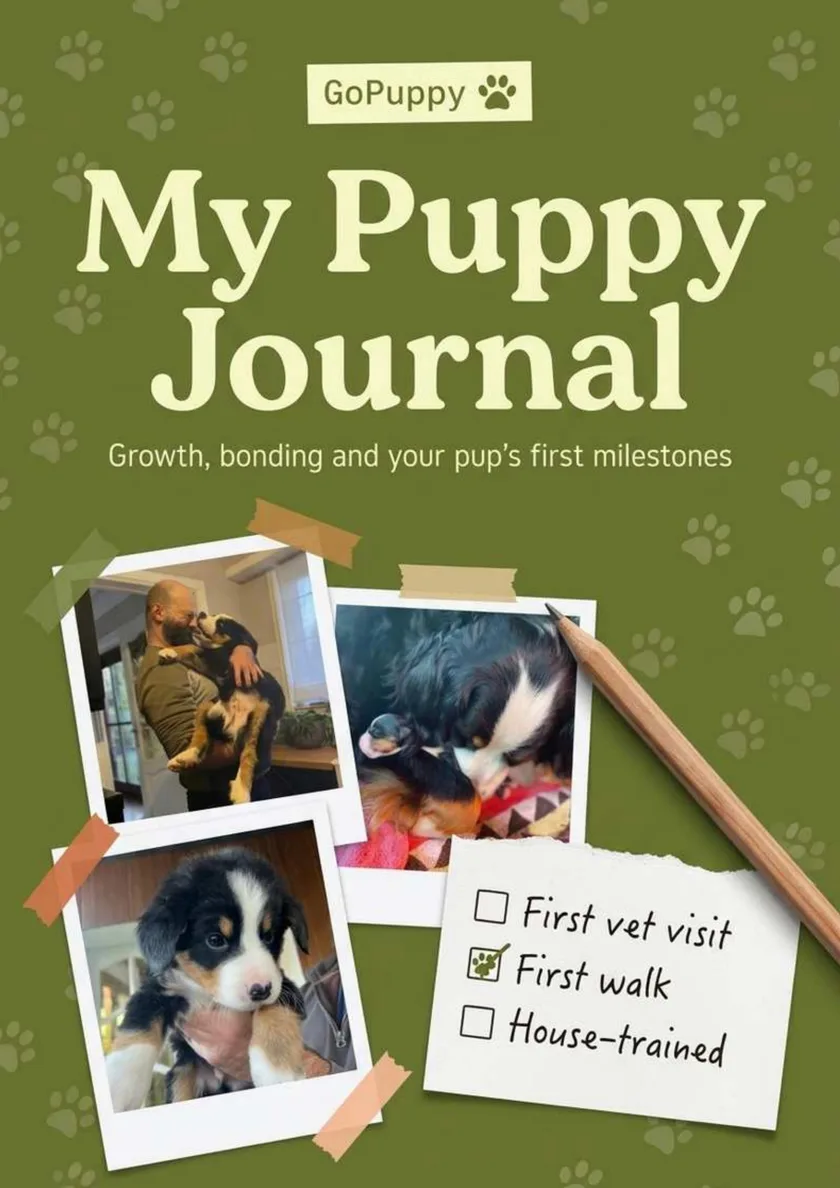
Chose a responsible breeder? Our own book, My puppy journal, follows your puppy step by step through their first year from here on, with guidance for every stage and room for photos and milestones.