Puppy training: the first months with your pup
What does puppy training actually involve, and when should you start? A practical overview of the first months, from socialisation to the first commands.

In the first months, puppy training is mainly about socialisation: getting your pup used to other dogs, people, sounds and situations, at a pace that suits them. Only after that comes the build-up to concrete commands. This article walks through the first months, what you can expect, and where a puppy course can help.
The socialisation period: the most important window
The first months coincide with your pup’s sensitive socialisation period, the phase in which new experiences most easily, and most lastingly, build a positive association. What your pup learns now (or misses out on) carries through into its later behaviour for a long time. For the practical side of settling in at home, toilet training, a resting spot, the first nights. Read puppy at home: the first weeks.
Month by month: what to expect
- First weeks at home: getting used to the family, a fixed resting spot, and carefully getting to know everyday stimuli (vacuum cleaner, doorbell, traffic at a distance).
- Around 8-12 weeks: the first vaccinations are usually done, and for many schools this is the starting point for a puppy course or a group lesson with pups of a similar age.
- 2-4 months: further socialisation with other dogs and people, the basics of attention and coming back on name, and getting used to the leash.
- 4-6 months: building up to slightly longer training moments and more distraction, step by step, don’t force too much too soon.
Every pup develops at its own pace; treat this as a guideline, not a strict schedule.
What a puppy training track typically includes
- Guided socialisation with other puppies in a controlled, safe setting.
- Recognising stress signals, an experienced guide often spots overstimulation before you do. Learn to recognise these signals yourself too via dog language and body language.
- Basic attention and habituation, such as reacting to their name, being able to be off-lead briefly, and getting used to the leash, no extensive commands yet.
- Guidance for the owner, so you can keep practising at home in the same, consistent way.
When do you choose a course, and when is practising at home enough?
Some basic habituation you can perfectly well do yourself at home. A course mainly adds value where it’s hard to organise at home: guided interaction with other puppies, and a trained eye that steps in early in case of overstimulation or a poor match between pups. Torn between a group course and individual guidance? Read the full comparison in choosing a dog school: group, private or puppy. You can find puppy training near you via GoPuppy’s dog school page.
Frequently asked questions
What’s the difference between puppy training and a puppy course? Both terms are often used interchangeably for the same thing: structured guidance for young dogs at a dog school. Puppy training can also refer to what you practise at home, alongside or instead of a course.
When do I start puppy training? As soon as your pup has had its first vaccinations, usually around 8-12 weeks. Check this with your vet and the dog school.
What does my pup learn in the first months? Mainly socialisation (getting used to other dogs, people and stimuli) and the basics of toilet training and attention, more extensive commands come later.
Can I do puppy training myself at home without a course? Partly, yes, but a course offers guided socialisation with other puppies and an experienced eye for stress signals, which is harder to organise on your own at home.
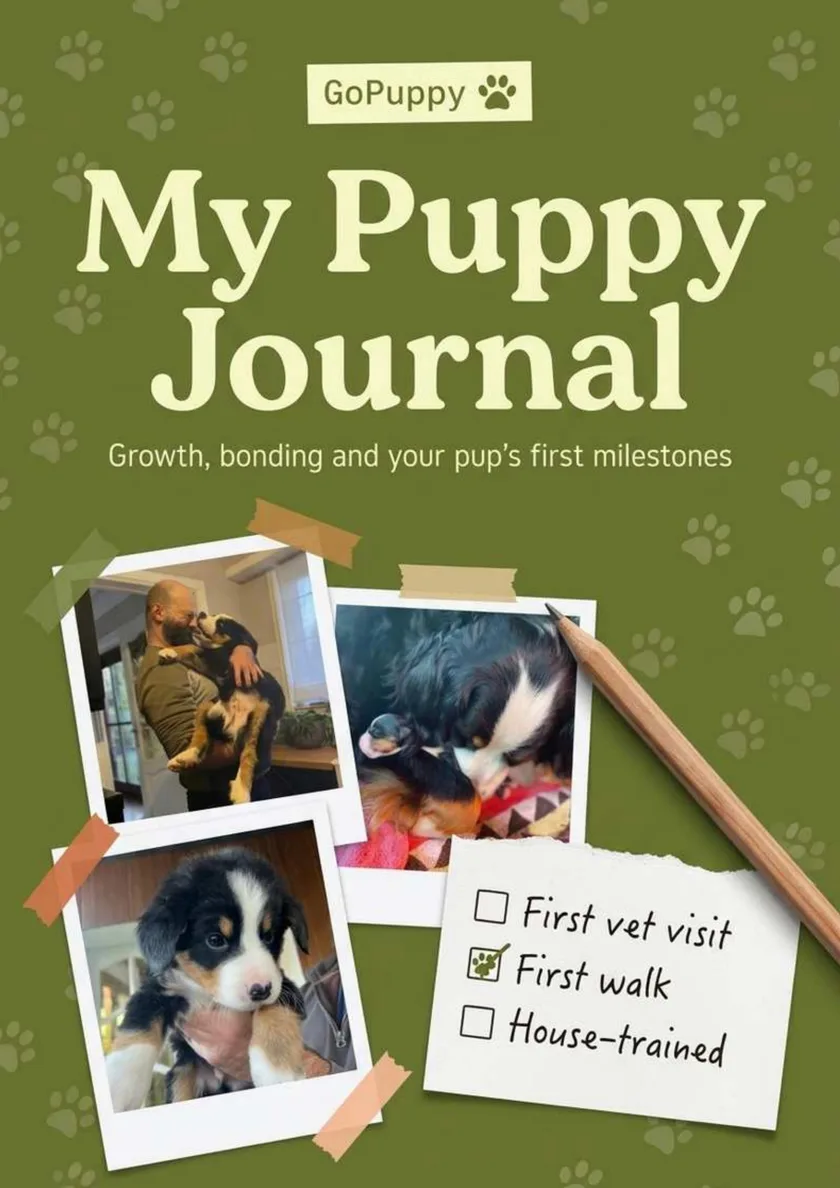
Want to keep track of those first months? Our own book, My puppy journal, follows your puppy step by step through their first year, with guidance for every stage and room for your photos and milestones.