
Dog behavioural therapy: what is it and when do you need it?
Fear, aggression or compulsive behaviour in your dog? Dog behavioural therapy isn't training but a therapeutic process. Explanation, warning signs and cost.
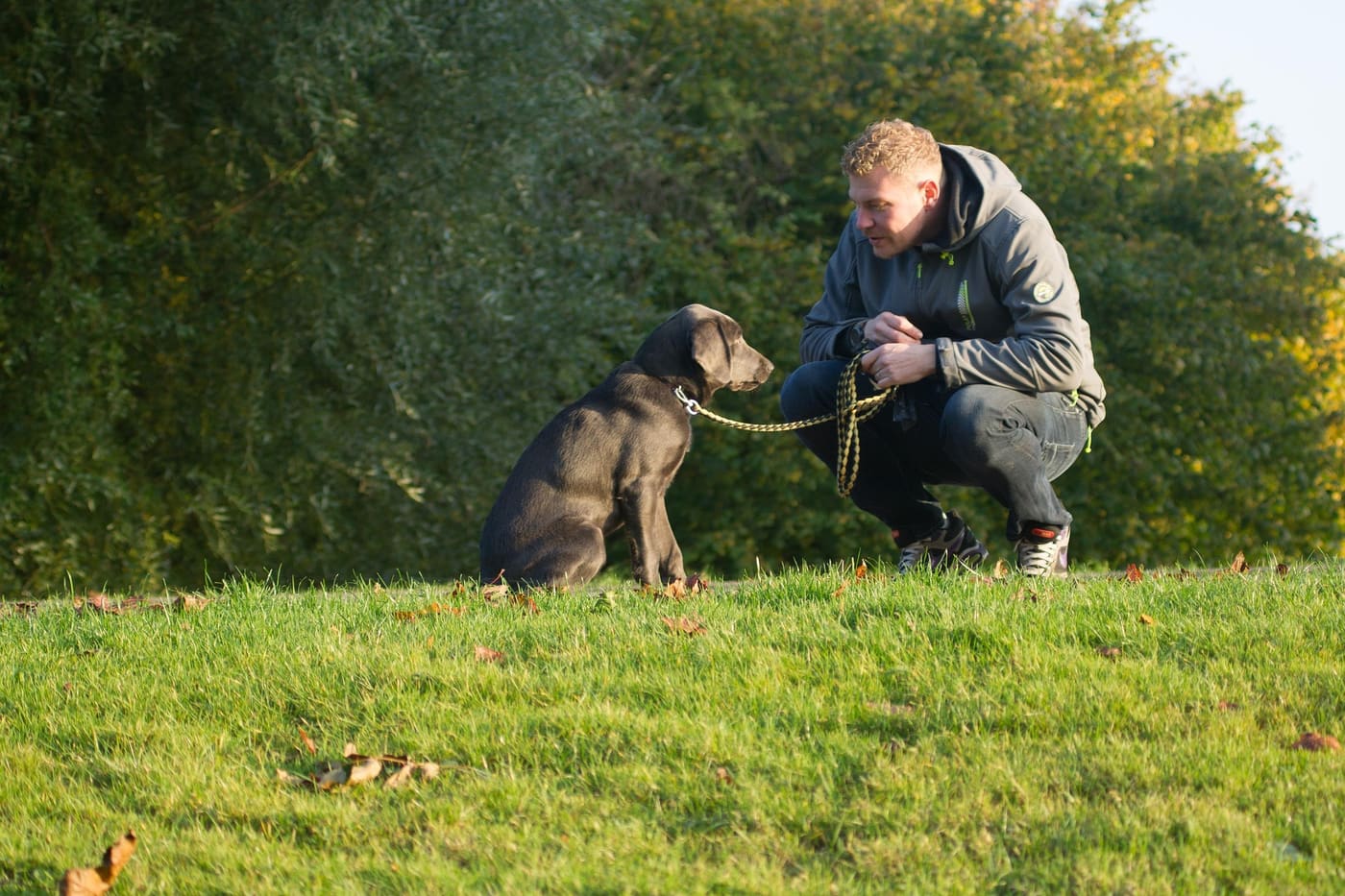
Dog behavioural therapy isn’t training, but a therapeutic process for an underlying behavioural problem: fear, aggression, compulsive behaviour, excessive barking or separation anxiety. Where a dog school teaches skills, a behavioural therapist looks for the cause of the behaviour and builds a targeted approach around it. Not sure whether your dog needs regular training or therapy? Read on below.
Dog school or behavioural therapy: the difference
A dog school focuses on obedience, socialisation and general skills, group lessons, puppy courses, obedience training. Behavioural therapy is more targeted: one-on-one guidance for a specific problem, often starting with an extensive analysis of the situation, its history and the triggers. Many regular dog schools refer clients on to a behavioural therapist themselves as soon as a problem turns out to be structural and doesn’t resolve with regular training.
When do you need behavioural therapy?
- Persistent fear that doesn’t lessen with regular socialisation or habituation.
- Aggression towards people, other dogs or specific triggers.
- Compulsive behaviour, such as excessive licking, spinning or chasing their own tail.
- Separation anxiety that persists despite gradual training.
- Leash reactivity that doesn’t decrease with standard training.
Do you recognise stress signals in your dog that persist or worsen? That’s a good moment to consult a behavioural therapist rather than waiting it out.
Who’s allowed to call themselves a behavioural therapist?
There’s no legal title protection, in principle, anyone can call themselves a dog behavioural therapist. Look, therefore, for recognition through a professional association. In the Netherlands that’s the NVGH (Nederlandse Vereniging van Gedragstherapeuten voor Honden, founded in 1997), whose members must hold a diploma from a recognised behavioural-therapy training programme and complete annual continuing education. The SPPD also keeps a register of accredited animal behaviour specialists, with a clear distinction between animal behavioural therapists and dog instructors. You can read more about this and other certifications in recognising an accredited dog school.
What does a behavioural therapy programme cost?
Prices vary a lot by practice and the complexity of the problem. As an indication, one Belgian practice quotes a behavioural assessment of around 2 hours for roughly €100, with follow-up consultations around €50, this is a sample rate from one practice, not a market average. Always ask each practice for a concrete price quote, and check whether your pet insurance covers (part of) the cost.
Frequently asked questions
What’s the difference between a dog school and behavioural therapy? A dog school trains obedience and skills; behavioural therapy treats an underlying problem such as fear or aggression, often through an individual programme.
When do I need a behavioural therapist instead of a dog school? With structural fear, aggression, compulsive behaviour or reactivity that doesn’t resolve with regular training, a regular dog school will often refer you on itself in that case.
What does dog behavioural therapy cost? This varies a lot by practice. Expect an extensive initial assessment plus follow-up consultations; always ask for a price quote in advance.
Does my pet insurance cover behavioural therapy? Some insurers reimburse consultations with a recognised behavioural therapist. Check this in your policy terms.