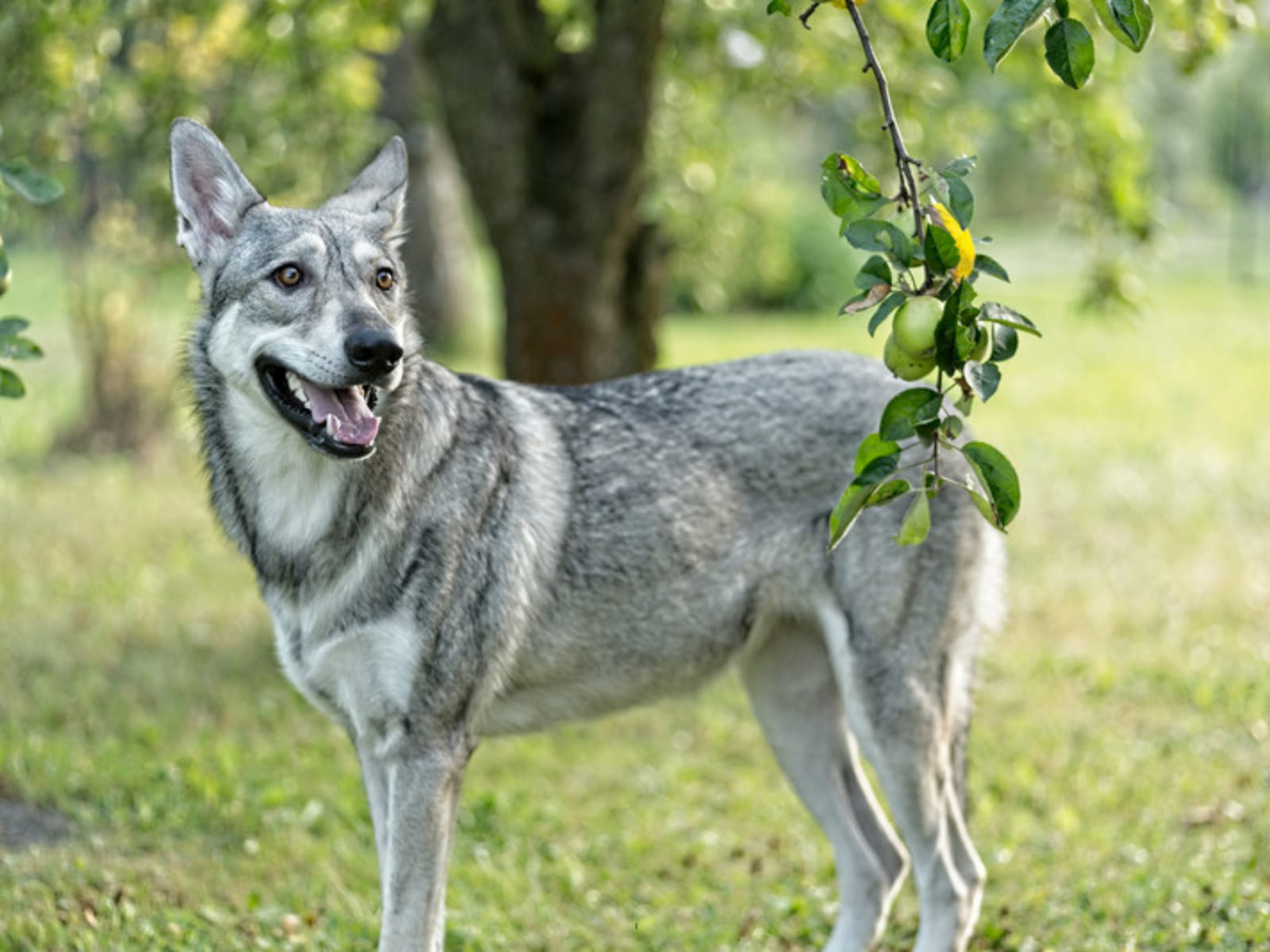
Character
According to the FCI standard, the Saarloos Wolfdog is a lively dog bursting with energy, with a proud, independent character. He is known to obey his own will first. Towards his owner he is devoted and reliable to a high degree. Towards strangers he may be reserved and usually does not seek contact. The standard calls his reserved, wolf-like way of avoiding unknown situations typical of the breed.
Wolf blood
Leendert Saarloos (1884-1969) felt that dogs had become too humanised. A lover of the German Shepherd, he wanted to breed natural qualities back in to produce a better working dog. In 1932 he crossed the German Shepherd Gerard van der Fransenum with Fleuri, a she-wolf. Breeding back to the father gave him a base population with one quarter wolf blood. At first some dogs proved useful as guide dogs for the blind. According to the standard, that usefulness faded as the share of wolf blood grew, and the breed turned out to be suited neither as a working dog nor as a guide dog. It was recognised in 1975 and named Saarlooswolfhond. The FCI places him in Group 1, section 1, sheepdogs.
What that means at home
A 2009 study from Wageningen UR describes him as a sociable house dog with no working function and no centuries-long history, an exception among the Dutch breeds. Choosing a Saarloos Wolfdog means choosing a dog that prefers to avoid strangers and new situations. A breeder from the breed club can tell you how the parents behave.
Health and size
According to the same source, the breed had so few breeding animals in 2008 that it counted as endangered under the FAO classification. Ask the breeder about the relatedness and inbreeding of the parents. Males measure 65 to 75 cm, females 60 to 70 cm; slightly taller is permitted.