Character
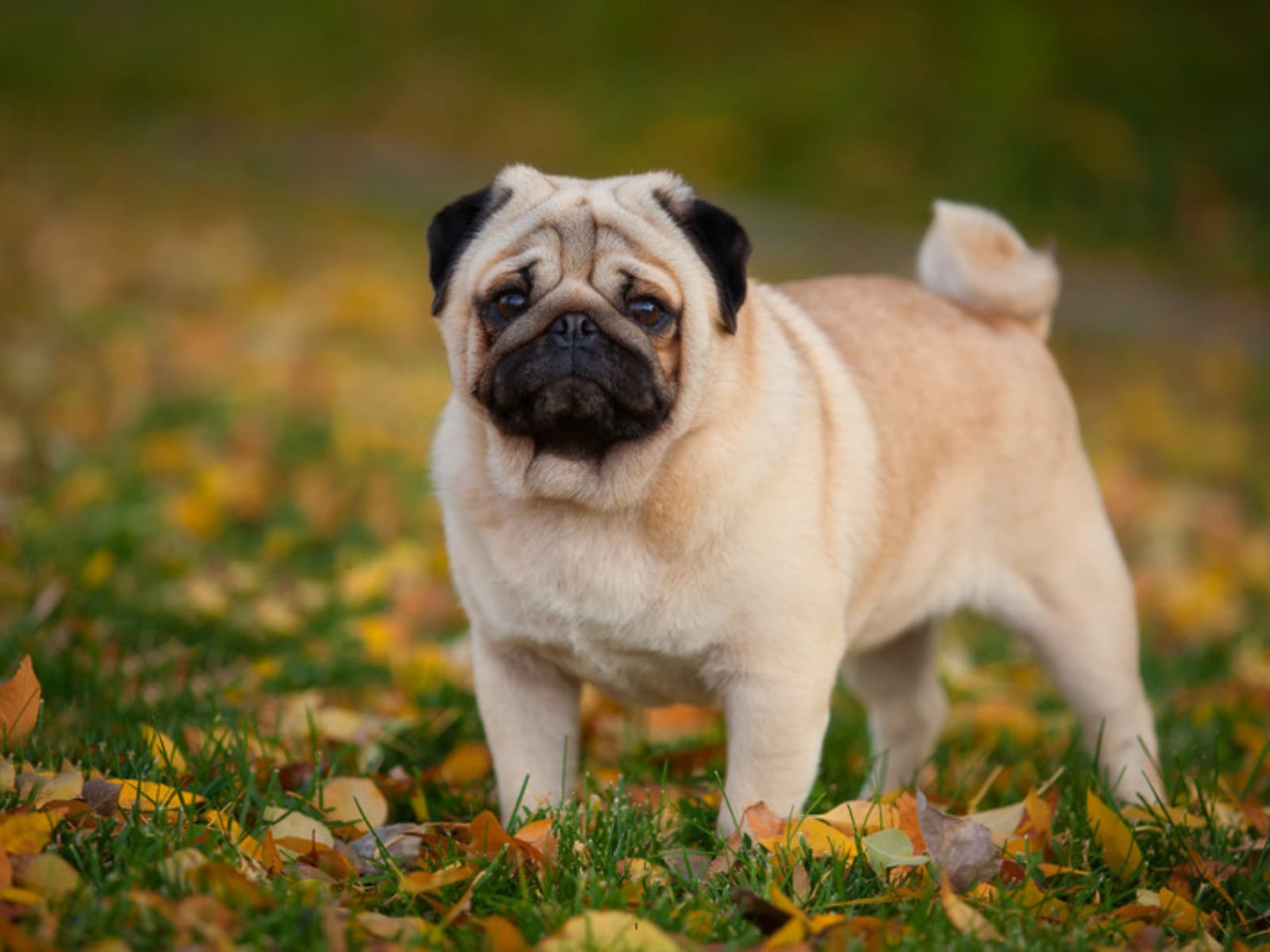
According to the FCI standard, the Pug has great charm, dignity and intelligence, and is even-tempered, happy and lively. The Royal Kennel Club adds that he was bred purely as a companion, is friendly with strangers and usually gets on well with other dogs. He can be strong-willed, responds badly to harsh handling and dislikes being left alone for long.
Origin
China is listed as his home country, where short-faced dogs were always in favour. Traders of the Dutch East India Company brought him to the Netherlands, where he was admired as early as the 1500s and became the symbol of the supporters of the House of Orange. With William III he came to England. Until 1877 he was known only in fawn; that year a black pair arrived from the Orient. The FCI places him in Group 9, section 11, small molossian type dogs.
Breathing and heat
The Royal Kennel Club asks breeders for a breathing test (BOAS, Respiratory Function Grading) and eye testing, plus a DNA test for Pug dog encephalitis (PDE) and hip testing. According to the RKC, the Pug’s flat face limits his tolerance for heat, humidity and strenuous activity. Ask a breeder for the breathing grade of both parents.
Weight
The ideal weight is 6.3 to 8.1 kg. The standard says he should be hard of muscle, and that substance must not be confused with overweight.